
 Westend61 - stock.adobe.com
How efficiency improvements, smart technology and price pressure shaped the development of heating costs.
Newspapers regularly run headlines like "Utility Cost Shock," striking a chord with many tenants and homeowners. While base rents are rising moderately, utility costs are increasing significantly. Energy prices, CO₂ levies, and higher maintenance costs are causing monthly expenses to climb noticeably. In some regions, they are now almost as high as the rent itself. Nevertheless, much has also developed positively over the past decade: Energy consumption has decreased, digital technology is gaining ground, and transparency is becoming the new standard. The following timeline shows how heating has changed since 2015 and where it is headed.
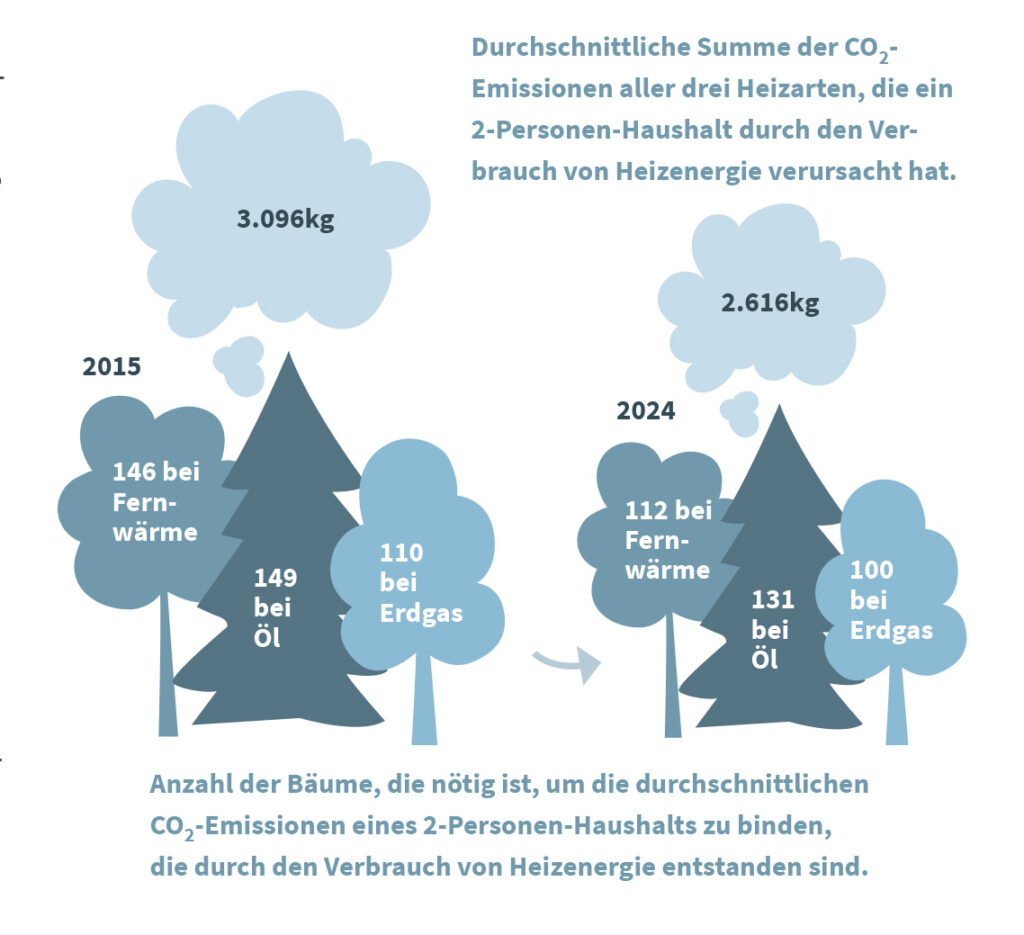 Communication Consultants GmbH
Decreasing consumption, rising costs
Every year, Minol prepares the heating bills for around 1,8 million households in Germany. Analyzing this data allows for a well-founded view of developments over the past ten years.
The result: Energy consumption has decreased significantly – a step forward in efficiency and climate protection. At the same time, heating costs have risen noticeably. Our model home demonstrates the concrete effects of this.
A turbulent development: Why ancillary costs have risen
For several years now, utility costs have often been referred to as a "second rent." Particularly in metropolitan areas, they sometimes reach a level that rivals the base rent. The reasons for this are manifold. A major driver has been, and continues to be, energy trading. Heating costs have been subject to strong fluctuations, especially as a result of geopolitical developments. While oil prices were low in 2015/2016 due to a glut triggered by the US fracking boom, price levels have risen sharply since 2017 – fueled by the global economic recovery, increasing energy demand, and production cuts by OPEC+. Gas and coal prices are also rising, with direct consequences for electricity and heating costs.
An increased CO₂ certificate price from under 10 euros per ton of CO₂ in 2017 to more than 80 euros in 2025, the introduction of the CO₂ price and the geopolitical situation further exacerbated the cost increase.
But it's not just energy that's driving up housing costs. Other components of operating expenses are also fluctuating. Inflation and the minimum wage are having a particularly noticeable impact on services. Higher wages in the skilled trades and service sectors are leading to increased costs for maintenance, janitorial services, building cleaning, and administration.
Added to this are public charges such as higher property taxes, rising fees for waste disposal and sewage disposal, and municipal levies. These also drive up prices. The sum of these developments means that ancillary housing costs have become a real financial burden for many households.
While in 2015, average utility costs for a 95-square-meter apartment amounted to €3.975 (€1.125 for heating and hot water and €2.850 for operating costs and electricity), a two-person household will have to pay an average of €4.758 in 2024 (€1.457 for heating and hot water and €3.301 for operating costs and electricity). This represents an increase of approximately 20 percent.
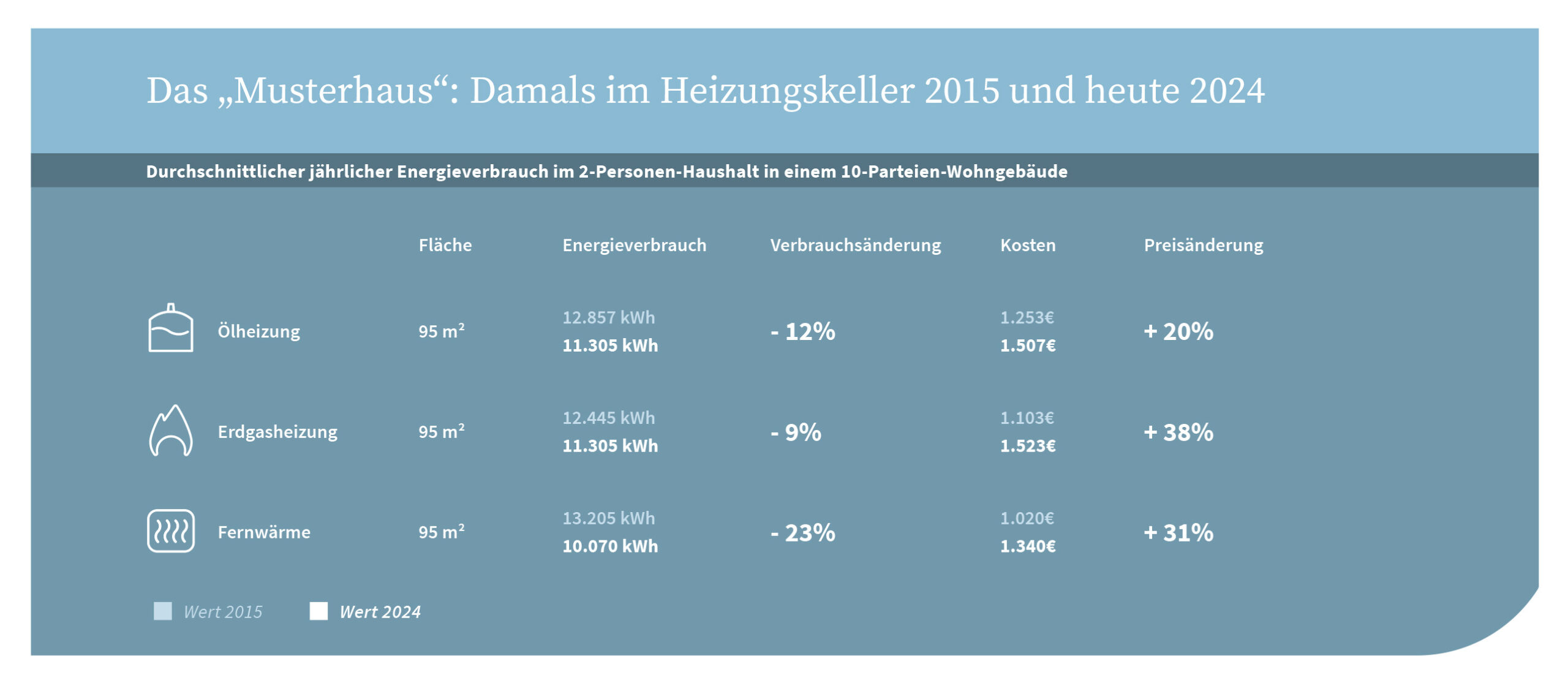 Communication Consultants GmbH
Digitalization as a driver of energy efficiency: How smart technology reduces consumption
The good news: While prices are rising, energy consumption is falling. Despite similar weather conditions, average consumption has declined noticeably over the past ten years: by nine percent for natural gas, almost twelve percent for heating oil, and almost 23 percent for district heating. A key driver of energy efficiency is the digitalization of metering technology. Since 2022, the German Heating Costs Ordinance (HKVO) has required landlords and property managers to equip their apartments and houses with modern wireless technology and to provide tenants with regular, interim consumption information.
Window space for data: Energy efficiency needs transparency
What used to appear once a year on the heating bill is now available in real time via app: consumption data, comparative analyses, and CO₂ balances. This new transparency has changed the way households manage their heating energy. Studies show that tenants who can regularly view their consumption data are more likely to adjust their behavior and save energy. This is an important step for the building sector to become climate-neutral by 2045. Now, landlords must seize this opportunity and provide the interim consumption information required by the German Heating Cost Ordinance (HVKO), as many are currently not utilizing this potential. According to a survey by the German Association of Property Managers (VDIV), only about a third of households receive this information regularly. Learn more about transparent energy use.
The journey continues: Energy efficiency can still be significantly increased.
The past ten years have shown that households are increasingly taking responsibility for their energy consumption and their own carbon footprint. Decreasing consumption and a growing awareness of efficiency confirm that this is the right course of action. However, given rising energy prices and ambitious climate targets, much remains to be done. The widespread digitalization of heating systems, the comprehensive provision of consumption data, and the use of smart technology are crucial to realizing the full potential. Because one thing is certain: those who know their consumption and manage it strategically can not only save money but also make a valuable contribution to climate protection.
 bnenin – Adobestock
Heating cost statistics 2025: Costs continue to rise – heat pump by far the cheapest heat generator
The 2025 heating cost statistics examine the heating behavior of German households and show how prices have developed.
bnenin – AdobestockHeating costs 2024: Lower consumption, higher costs – trend of the past five years
Minol analyzed heating bills for 2024. The result: The trend from previous years continues. While households are becoming increasingly conscious of their heating energy consumption and using less, costs continue to rise – although not as sharply as in the previous year.
Author

Kundenmagazin lesewert | Ausgabe 2025
 InsideCreativeHouse – Adobestock
Always up to date
* required fields