
 primopiano - stock.adobe.com
Accurate valuation of heating oil is crucial for fair and legally compliant heating cost billing. The key is that only actual consumption is billed – at the price of each delivery and in the order of receipt.
Why is the residual valuation of heating oil and pellets important?
Landlords and property managers who stockpile fuels such as heating oil or pellets must bill them correctly. It's not the current tank level that counts, but the fuel consumed – valued at the respective purchase price. Especially with highly fluctuating energy prices, an error can quickly become costly.
Typical problems arise:
- with highly fluctuating heating oil prices,
- if the tank is filled shortly before the end of the billing period,
- or if tenants move out during the billing period.
In such cases, incorrect assessments lead to injustices and legal risks – for example, when former tenants demand payment for remaining amounts already paid.
How can heating oil be billed correctly?
FIFO principle: First delivered, first consumed
The Heating Costs Ordinance (§ 7 para. 2 HKVO) stipulates that only the actual amount consumed may be billed. The decisive factors are when the heating oil was delivered and in what order it was used.
The so-called FIFO principle (First In – First Out) means:
- The fuel delivered first will be used first.
- The valuation is based on the price of the respective delivery.
- Unused stock must be recorded separately and distinguished from consumption.
What needs to be considered during the residual valuation?
- Beginning and remaining stocks must be documented and evaluated
- In the case of multiple deliveries, the order of refueling is what counts.
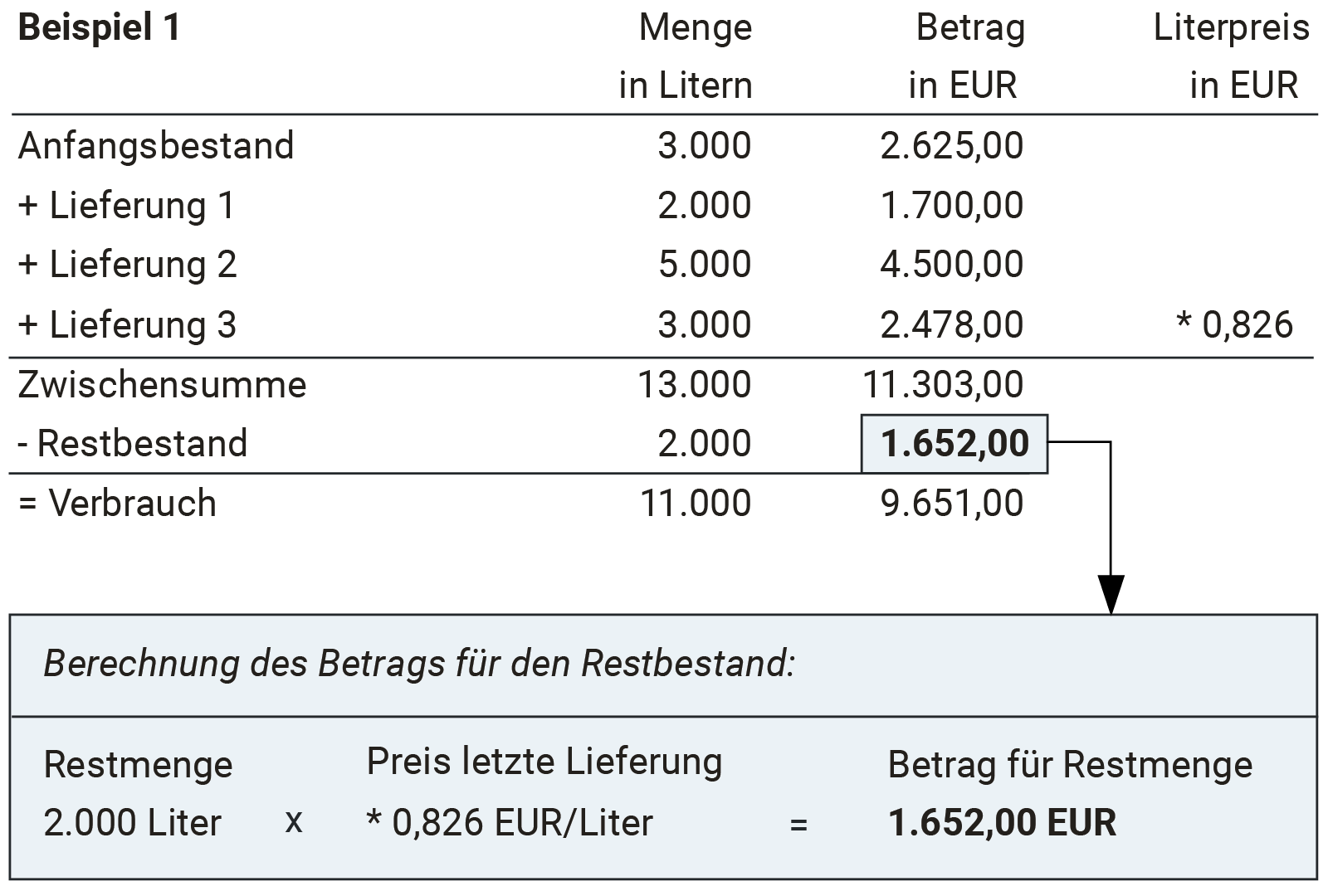
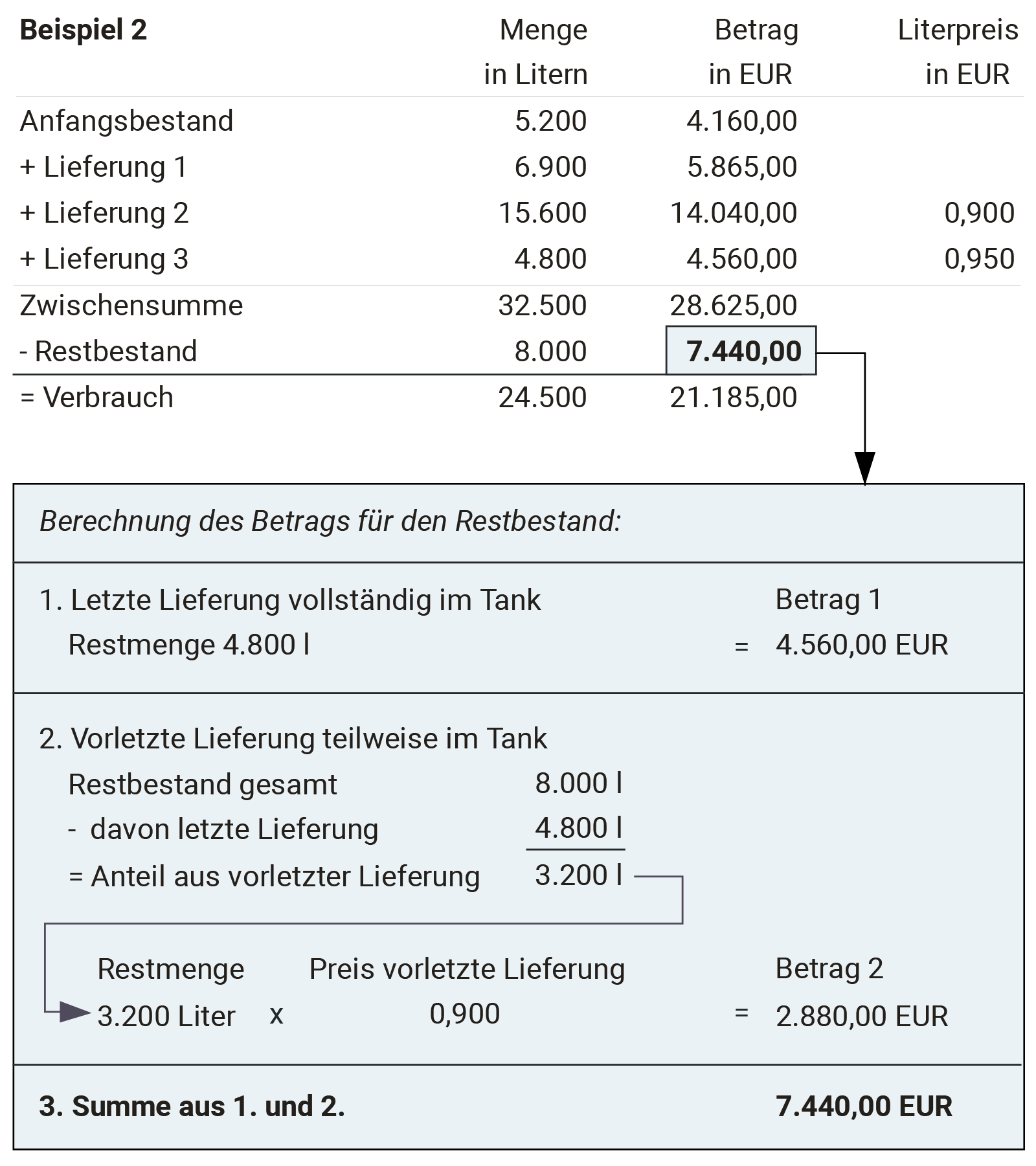
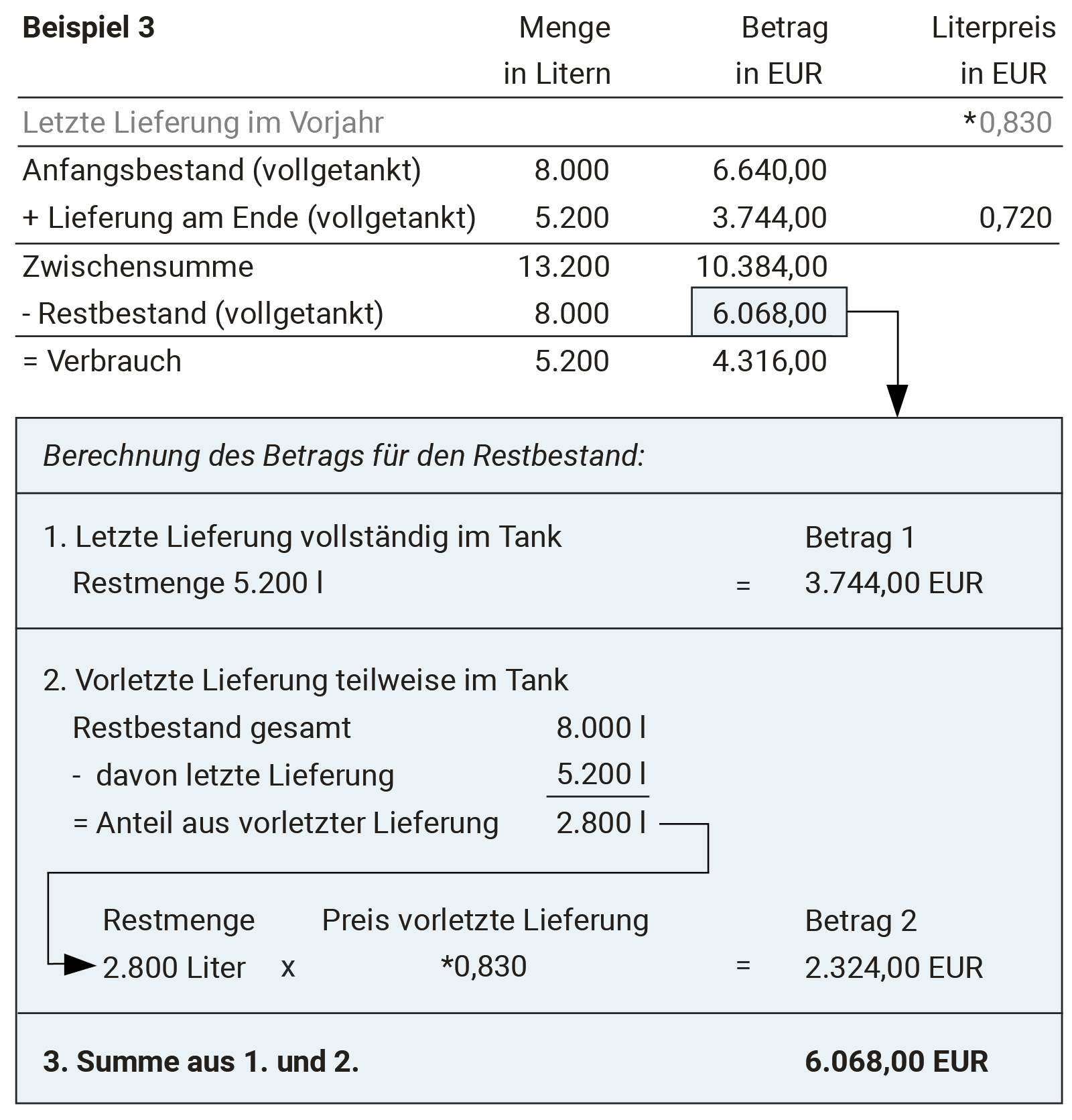
- If the remaining stock is larger than the last delivery, the price of the penultimate delivery is taken into account proportionally.
This practice has been confirmed by rulings of the Federal Court of Justice and various regional courts (e.g., Federal Court of Justice ruling of November 23, 1981, case no. VIII ZR 298/80).
Typical calculation cases
Remaining quantity less than last delivery: Valuation based on the price of the last delivery
Remaining quantity greater than last delivery: Include a proportionate share of the price of the penultimate delivery.
Full refueling at the end of the period: Only the previous consumption is billed – at the prices of the previous period.
What happens if the assessment is incorrect?
Anyone who fills up their tank at the end of the year and uses that purchase price for the entire billing is making a mistake. The new fuel supply hasn't been used up and therefore shouldn't be included in the billing.
Such errors can be costly – for example, when tenants move out and demand their share of the remaining inventory back. Without documented beginning and ending inventory levels, this claim often cannot be properly substantiated.
Conclusion: Only the correct residual valuation protects against disputes.
The residual valuation of heating oil according to the FIFO principle is essential in order to:
- to create legally compliant invoices,
- To avoid subsequent demands and repayments,
- To create transparency towards tenants.
Minol offers a free residual value calculation as part of the heating cost statement. Landlords simply need to specify the remaining quantity in the cost breakdown. Minol handles the professionally accurate valuation.
Recommendations: How landlords should act
- Document the beginning and ending balances for each accounting period.
- Record delivery dates and quantities accurately.
- Take advantage of the support of a professional billing service provider like Minol.
Author

Quelle: Handbuch der Wärmekostenabrechnung | Frank Peters Minol Messtechnik W. Lehmann GmbH & Co. KG, 2019
 InsideCreativeHouse – Adobestock
Always up to date
* required fields