

Passing on the calibration costs for measuring devices such as heat, cooling, hot and cold water meters is generally permissible. However, landlords should ensure that the costs are correctly distributed over the calibration validity period and pay attention to choosing the right financing and maintenance models.
Why are measuring instruments important?
As a landlord, you are obligated under Section 4 of the Heating Costs Ordinance to ensure the proper recording and billing of your tenants' energy and water consumption. This requires the installation of metering devices for heating and hot water. The law does not specify whether these devices are purchased or rented. However, the measuring devices are subject to mandatory calibration requirements, which must be met. Failure to comply can lead not only to billing adjustments but also to legal consequences.
When is it permissible to pass on equipment costs to tenants?
Many landlords are unsure whether they are allowed to pass on the costs of metering devices to their tenants in the heating bill. Mistakes often occur, especially when initially equipping small buildings, if owners distribute the entire device cost among the tenants in the first billing statement. This is not permissible and leads to unfairness. If a tenant only lives in the building for a short time, they bear costs from which later tenants benefit.
Allocation of equipment costs for purchased measuring instruments
In the new building
- The building owner bears the costs for purchasing measuring devices; a distribution of the costs is not possible.
- Tenants pay for the use of the measuring devices through their rent.
In the old building as a modernization
Retrofitting measuring devices is considered a modernization that sustainably saves energy or water. The legislator has created several options for landlords to be reimbursed for these expenses. However, a distinction must be made between privately financed and rent-controlled housing.
Rent-controlled housing | Privately financed housing – owner-occupied condominiums | Privately financed housing – rented condominiums | |
Purchase of appliances (all types) upon initial occupancy (new building) | No possibility of passing on the costs – it is the landlord's responsibility. | No possibility of passing on costs – it is the responsibility of the developer, unless otherwise agreed upon when purchasing the apartment. | No possibility of passing the costs on to the developer – it's the developer's responsibility. |
Purchase of the devices (all types) for an existing building (no measuring devices are currently present) | Pass-through to tenants through rent increase according to § 6 NMV and § 11 II. BVO | Allocation to the apartment owners according to the same distribution key as the administrative costs. | The cost of the equipment will be passed on to the tenants at a rate of 8% of the annual rent. § 559 BGB (formerly Section 3 of the Rent Control Act). |
Maintenance and rental contracts
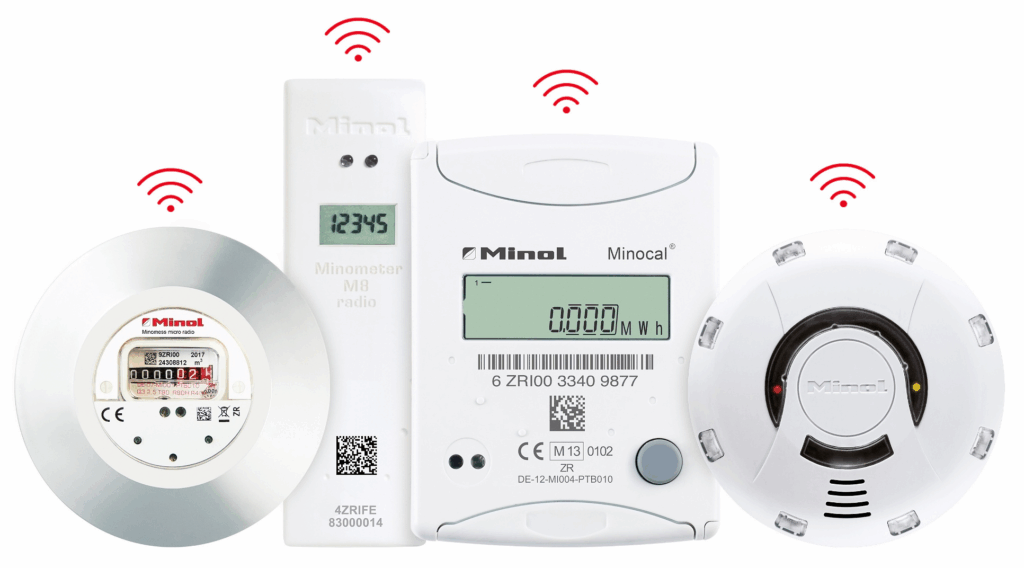
An alternative to direct replacement is to conclude maintenance or rental contracts with the metering device manufacturer. The costs for such contracts are fully chargeable to tenants. This option is often more cost-effective and less complicated. Furthermore, the costs are directly included in the ongoing heating and hot water bill.
Our equipment rental service – your advantage
The following services can be agreed upon with us as part of the equipment rental:
- The Initial installation The equipment is included in the rental price if agreed upon.
- Rental costs are subject to the Heating Costs Ordinance. apportionable. By agreement Allocation of equipment rental costs directly within the annual heating bill for the residents.
- A regular exchange The meter for heat, cold, hot water and cold water is replaced every six years at no additional cost (for hot water meters, a calibration period of five years applied until November 3, 2021).
- The replacement of a device creates no extra labor or travel costs and no calibration fees.
- The building is always functioning perfectly and measuring instruments that comply with the calibration law were used. The invoice is therefore uncontested and you have no risk of fines or levies, for example, due to expired calibration periods.
- functional tests are carried out during the annual meter reading or – in the case of wireless equipment – via remote diagnostics.
Allocation options in new buildings when using rented measuring devices
Rent-controlled housing | Privately financed housing – owner-occupied condominiums | Privately financed housing – rented condominiums | |
Rental/leasing of equipment for hot water and heating consumption measurement for first occupancy (new building). | Tenant consent is required according to... § 4 (2) HKVO Required, but not available in new construction. Consider including it directly in the rental agreements. Allocation according to... § 7 (2) HKVO (for heating) and § 8 (2) HKVO (for hot water). | Costs can be passed on to the owners if already agreed upon in the apartment's purchase contract. Otherwise, a majority vote of the owners' association is required (though this is hardly possible in new construction). Costs can be passed according to... § 7 (2) HKVO (for heating) and § 8 (2) HKVO (for hot water). | Tenant consent is required according to... § 4 (2) HKVO Required, but not available in new construction. Consider including it directly in the rental agreements. Allocation according to... § 7 (2) HKVO (for heating) and § 8 (2) HKVO (for hot water). |
Rental/leasing of equipment for cold water consumption measurement in the case of initial occupancy (new building). | No approval process is required, but the allocation of rental costs should be stipulated directly in the rental agreement. Allocation according to § 21 NMV . | Costs can be passed on to the owners if already agreed upon in the apartment's purchase contract. Otherwise, a majority decision of the owners' association is required (though this is hardly possible in new construction). | No approval process is required, but the allocation of rental costs should be stipulated directly in the rental agreement. There is no regulation in the German Civil Code (BGB), therefore, alternatively, allocation according to [relevant legal provision]. § 21 NMV (what is legal in social housing can only be cheap in privately financed housing). |
Approval process for equipment rental
- Equipment rental for heating/hot water is subject to Approval procedure Sea Section 4 (2) Heating Costs Ordinance.
- Tenants must be informed in advance. become - written with a Cost information.
- Cold water measurement fällt not under the heating cost regulations, but:
- A The same consent procedure is recommended., in order to avoid legal risks.
- Approval is considered granted., if more than 50% of tenants do not object within one month.
- Silence = consent.
- Compliance with the procedure is mandatory., as it is both legally required and demanded by courts.
Allocation options in old buildings or modernization with rented measuring devices
Rent-controlled housing | Privately financed housing – owner-occupied condominiums | Privately financed housing – rented condominiums | |
Rental/leasing of equipment for measuring hot water and heating consumption in existing buildings. | Tenant consent is required according to... § 4 (2) HKVO required. Allocation according to § 7 (2) HKVO (for heating) and § 8 (2) HKVO (for hot water). | Majority decision of the owners' association is required. Allocation according to... § 7 (2) HKVO (for heating) and § 8 (2) HKVO (for hot water). | Tenant consent is required according to... § 4 (2) HKVO Required but not feasible because there is no majority of users in a rented apartment. An agreement between tenant and landlord within the framework of a voluntary contractual agreement is required. Allocation according to § 7 (2) HKVO (for heating) and § 8 (2) HKVO (for hot water). |
Rental/leasing of equipment for measuring cold water consumption in existing buildings. | No approval process is required, but the allocation of rental costs must be stipulated in the rental agreement. Allocation according to § 21 NMV . | Decision by majority vote of the owners' association. Allocation as agreed. | No approval process is required, but the apportionment must be agreed upon in the rental agreement. There is no regulation in the German Civil Code (BGB), therefore, alternatively, apportionment according to [relevant legal provision]. § 21 NMV (what is legal in social housing can only be cheap in privately financed housing). |
Why are calibration service and maintenance contracts useful?
Unfortunately, for many landlords and homeowners, as well as some condominium associations, the one-time purchase of the devices is often all that's needed. They meet the legal requirements once and completely lose sight of future needs. Many landlords underestimate the fact that using uncalibrated measuring devices is prohibited and that regular recalibration is legally required. It is therefore advisable to conclude a maintenance contract with the measuring device manufacturer. This offers the following advantages:
- The devices are regularly replaced or recalibrated.
- Defects occurring outside the warranty period are covered by the maintenance contract.
- The costs for maintenance and calibration services are chargeable and can be distributed directly to the tenants.
- There are no additional fees for labor, travel or calibration during the exchange.
- Legal risks and fines resulting from the use of uncalibrated devices are avoided.
The Heating Costs Ordinance confirms that these maintenance costs are among the operating costs that can be passed on to the recipient.
Allocation of calibration costs in case of device replacement
Calibration periods
- Hot water and heating: usually 5 years
- Cold water: 6 years
Devices such as water and heat meters must be replaced after their calibration periods have expired. The costs for replacement are generally chargeable to tenants. The following applies:
- The costs must not be passed on to the current tenants all at once.
- The levy is calculated proportionally over the calibration validity period (for example, 5 years for hot water meters).
- This prevents a tenant who is about to move out from incurring disproportionately high costs, while the next tenant benefits.
- The German Operating Costs Ordinance (§ 2 para. 2 BetrKV) stipulates that costs of calibration and replacement are chargeable to the tenant.
A multi-year levy is clearly regulated by law and is supported by the courts.
What are the special features of heat cost allocators?
Heat cost allocators are not subject to mandatory calibration, but are affected by wear and tear and technological obsolescence. Modern heating systems and technological advancements require regular system maintenance.
- System maintenance ensures the use of technically sound, approved and functional heat cost allocators.
- It relieves landlords of frequent individual modernizations and avoids the use of outdated equipment.
- The costs for system maintenance are chargeable and can be immediately distributed to tenants.
- This applies to both price-controlled and privately financed housing (in the case of condominiums, after a majority decision of the owners' association).
Risks of incorrect allocation of equipment costs
Improper allocation of equipment costs can cause legal problems:
- Costs that are passed on all at once instead of being spread over several years can be challenged by tenants.
- Landlords risk fines if they use uncalibrated equipment.
- Disputes and injustices arise when tenants bear costs from which they do not benefit.
- Entering into maintenance and calibration service contracts minimizes these risks and simplifies billing.
Author

Quelle: Handbuch der Wärmekostenabrechnung | Frank Peters Minol Messtechnik W. Lehmann GmbH & Co. KG, 2019
 InsideCreativeHouse – Adobestock
Always up to date
* required fields