
 ivanko80 – stock.adobe.com
FAQ from Brunata Minol
Our FAQs provide answers to frequently asked questions about Brunata Minol's solutions and services.
 contrastwerkstatt – stock.adobe.com
Heating bill
How often are heat cost allocators and water meters read?
The standard period for a heating bill is one year. Therefore, the meter readings are typically taken every twelve months.
For electronic devices, consumption is recorded from the set cut-off date (e.g., December 31st at midnight). This cut-off date value is then transmitted wirelessly for devices with remote reading capability. For electronic heat cost allocators without wireless capability and for heat cost allocators based on the evaporation principle, the cut-off date value or the liquid level is read by a service partner on site. Due to holidays and vacations, reading dates may shift from one year to the next. For initial billing or when the billing cut-off date is changed, the reading cycle may deviate once. For devices with cut-off date storage, the reading always takes place after the cut-off date.
How are heat cost allocators read?
The reading method varies depending on the type of device:
Reading of heat cost allocators according to the evaporation principle
Reading of electronic heat cost allocators
At the time of the meter reading, no information can be provided regarding the expected heating costs. A comprehensive heating and water bill requires technical documentation, all energy and utility costs, and an analysis of all building meter readings. If our service partners are unable to provide this information at the time of the reading, it is not due to any ill will or incompetence. The meter reading alone does not allow us to predict the heating costs.
What is the billing period for heating cost statements?
The billing period is generally twelve months and is determined by the landlord/property manager. If no specific instructions are given, the meter reading period is assumed to be the billing period. For organizational reasons, the billing period may differ from the meter reading period by a few days for heat cost allocators and water meters that are not read remotely. Incidentally, courts and tenancy law (as amended in 2002) stipulate a maximum billing period of twelve months. Shorter periods than twelve months are not a problem.
Why does the ampoule color change annually?
If you are still using evaporative heat cost allocators, the color of the ampoules changes annually for monitoring purposes. This color change has absolutely no effect on the evaporation characteristics. The color change serves to immediately identify any ampoules that may not have been replaced in the previous year. This helps to avoid billing errors.
How do I register for a meter reading?
The meter reading for heat cost allocators, water meters, and heat meters is scheduled in advance and sent to the building owner/manager, who then informs their apartment owners or tenants. The German Association for Heating and Water Cost Allocation (Arbeitsgemeinschaft Heiz- und Wasserkostenverteilung e.V.) recommends a guideline of ten days. For larger properties or upon special request, the meter reading service or building manager will also post notices. For an additional fee, individual notification to each resident via postcard is also possible. For meters read remotely, no notification is sent to the occupants, as no entry to the apartment is required.
How can bathtub convectors be billed?
Radiators behind bathtub aprons, especially in apartments with interior bathrooms, cannot be equipped with heat cost allocators, or only to a very limited extent. Consumption is generally estimated.
What happens when radiators are dismantled?
If radiators are a nuisance, permanently installed, or if they display consumption readings that one would like to avoid in the future, removing them is a tempting option. However, because this can cause hydraulic problems in the heating system, a qualified heating engineer should always be consulted. It's also important to remember that tenants are not permitted to remove radiators without the landlord's consent. Even homeowners require the approval of the homeowners' association.
Which devices are subject to mandatory calibration?
According to the German Measurement and Calibration Act (MessEG), supplemented by the Measurement and Calibration Ordinance (MessEV), meters for heat, cooling, hot water, and cold water must be calibrated every six years (for hot water meters, a calibration period of five years applied until November 3, 2021). The owner of the measuring devices, i.e., the building owner, the homeowners' association, or the individual apartment owner, is responsible for compliance with the calibration requirements. These meters are typically not refurbished and recalibrated in the case of apartment-specific metering, but rather replaced with new devices. Removed meters whose calibration has expired are recycled.
More information on the calibration of measuring devices for heating and water billing.
Heat cost allocators are not subject to mandatory calibration. This applies equally to evaporative devices and electronic heat cost allocators. Their technology does not permit calibration. Heat cost allocators are considered non-calibrated measuring aids, the design and accuracy requirements of which are regulated in the standards DIN EN 834 and DIN EN 835.
How does consumption-based billing contribute to energy savings?
Consumption-based billing significantly contributes to more conscious energy and water consumption, and thus to energy savings. Studies have shown that simply by installing meters, savings of between 15 and 20% on heating costs and over 30% on water consumption can be achieved. This makes consumption-based billing one of the most cost-effective ways to save energy and money.
Does the location of a residence affect heat consumption?
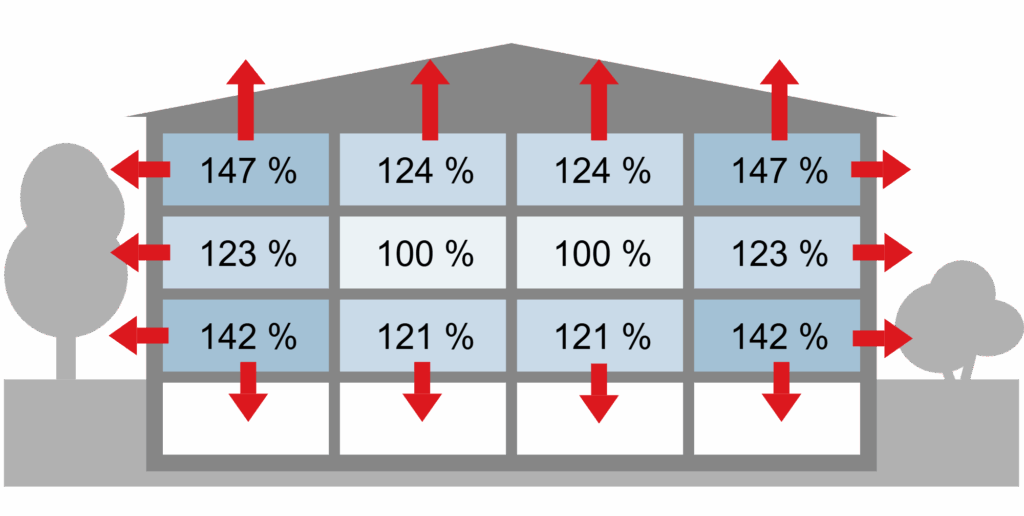
Apartments on the top floor and those with an above-average number of exterior walls inevitably have higher heating consumption than apartments in mid-range locations. This disadvantage in terms of heat efficiency becomes apparent when billing is based on actual consumption. While billing with fixed costs (i.e., billing based on square meters) mitigates this disadvantage, it cannot be completely eliminated. It is not permissible to compensate disadvantaged housing locations through credits within the heating bill.
More on the influence of location on heating costs
Can heating and water meter readings be taken without entering the apartment?
With the exception of evaporative heat cost allocators, all Brunata Minol meters can now be read remotely using modern wireless technology. Specifically, service personnel no longer need to enter the apartment for meter reading, and homeowners and tenants no longer need to take a day off work for this purpose.
What are degree days used for in heating cost calculations?
When ownership or tenancy changes, heating degree days are used to allocate heating costs between the previous and new tenants, or, if desired, an interim meter reading is taken. A time-based allocation of heating costs is not recommended because more heating is required in winter than in summer. Heating degree days are calculated by the German Meteorological Service (DWD). They represent a measure of the temperature profile during a heating season.
What function do basic costs have in heating cost billing?
Between 30 and 50% of heating and hot water costs are distributed among the heat and hot water consumers of a building according to a fixed formula, for example, based on living space. Basic costs serve to cover pipe losses, standby losses, and other allocable fixed costs of the heating system, which are incurred even without heat being consumed in the apartment. At the same time, this also compensates for disadvantaged apartment locations (for example, attic apartments with higher heating requirements) and partially offsets heat transfer from one apartment to another (transmission heat). Therefore, basic costs must be charged even for vacant apartments. The building owner or the owners' association is responsible for determining the appropriate distribution formula.
What is a heating bill?
The basis for the heating bill is the consumption readings and the fuel and ancillary costs determined and compiled by the homeowner or property manager. Once all the data is available, the bill is prepared at the Brunata Minol headquarters and provided to the property manager.
How can heating costs be saved?
The most important rules are:
- Lowering the room temperature by one degree Celsius saves around six percent on heating costs.
- To ventilate, windows should be fully opened briefly several times a day, ideally creating a cross breeze by opening two windows on opposite sides of the room. Continuous ventilation with tilted windows only cools the rooms unnecessarily in winter, and the air exchange is minimal.
- Thermostatic radiator valves open during cold downdrafts in winter due to their frost protection mechanism. Therefore, avoid leaving windows tilted open above radiators for extended periods.
- Long curtains or furniture placed in front of radiators cause heat to build up. Radiators should always be kept clear in winter.
- Close the shutters in the evening. This will increase insulation.
- Do not allow rooms to cool down during extended absences, such as holidays. This can lead to frost damage and increased energy consumption for reheating.
More tips in our worthwhile blog
What does the Heating Costs Ordinance regulate?
The "Ordinance on Consumption-Based Heating and Hot Water Cost Billing" dates back to 1981 and was a consequence of the Energy Saving Act. It was amended in 1984, 1989, 2008, and 2021 and provides the legal basis and regulations for conducting the annual heating cost billing. It stipulates the principles of the billing method, as well as permissible measuring devices and eligible cost categories.
What types of heat cost allocators are there?
Heat cost allocators have been tried and tested devices for decades, approved for recording heat consumption at radiators. They have been continuously developed and offer a cost-effective way to fairly distribute heating costs. Their use contributes to efficient energy consumption in millions of households. Modern heat cost allocators feature electronic data acquisition with wireless transmission of consumption data, allowing for readings without entering the apartment. An older version is based on the evaporation principle. From 2027 onwards, only heat cost allocators with remote reading will be permitted, while older models without wireless transmission must be replaced by then.
How long is a heating season?
Some tenants find their apartments too cold because the landlord wants to keep the building's heating costs down. Generally, the building owner must keep the heating system running throughout the entire heating season. If there is no agreement in the rental contract, the heating season is considered to be the seven months from October 1st to April 30th. Most courts are of the opinion that tenants are entitled to expect a room temperature of at least 20°C during the day – even in summer.
How does cold evaporation affect heating cost readings?
Cold evaporation is the evaporation of the measuring fluid at room temperature, even when the radiator isn't emitting heat. Due to physical limitations, cold evaporation always occurs with evaporative heat cost allocators. To bridge the gap during the summer months when heating isn't required, the ampoules are overfilled with additional fluid above the zero point. According to the European standard EN 835 for evaporative heat cost allocators, this fluid overfill is required for 120 days without heating at a room temperature of 20°C. In warmer summers, it's possible that consumption may be registered even on unused radiators. However, since this occurs in all apartments, it doesn't disadvantage any individual.
What is meant by meter reading for heating costs?
The meter reader will explain the reading process upon request and carry out the reading together with the tenant or homeowner. Even after the reading, a verification reading is always possible because the display remains active on electronic meters, and on evaporative heat cost allocators, the expired ampoule is inserted into the device along with the new one. Incorrect readings and mix-ups are virtually eliminated by the dual-scale system (two readings for each device).
Why are there still costs for heating and water despite the property being vacant?
Heating and hot water costs must also be billed for vacant apartments. While this often causes frustration for some landlords, it is perfectly justifiable both legally and technically. Up to 50% of a building's energy costs are unrelated to individual consumption and are allocated based on living space. Therefore, even vacant apartments must bear at least the basic cost component, even if no heating or hot water has been consumed.
Why does the radiator gurgle and not get properly warm?
If the radiator is making strange noises and gurgling sounds, it's no longer heating up properly, as there's often still air trapped inside. This air should definitely be released, because it reduces heating efficiency and can cause inaccurate meter readings.
Is manipulation of heating and water meters possible and permitted?
All heating and water meters are protected against unauthorized access by seals. Attempts to tamper with these meters are punishable by law and can be prosecuted as fraud or attempted fraud under Section 263 of the German Criminal Code (StGB). Furthermore, it has been proven that all attempts to manipulate evaporative heat cost allocators lead to inflated consumption readings. There are no methods by which the consumption reading can be lowered.
Why do measurement discrepancies occur with water and heat meters?
However desirable absolute accuracy may be, it is practically unattainable with economically justifiable effort. Especially with water and heat meters, measurement discrepancies between the reading of a main meter and the sum of all apartment meters are unavoidable. However, because these discrepancies occur in all apartments, the relative distribution of costs means that no individual is disadvantaged in the end.
What should you do if you are not at home on meter reading day?
If you are unable to be present on the scheduled meter reading day for your building, please leave your key with a neighbor, the caretaker, or the landlord/property manager. This will prevent additional visits, the costs of which are not included in the standard fees. You will, of course, receive written notification of a rescheduled appointment. Furthermore, the landlord/property manager will be informed about any apartments that are inaccessible.
Why is there a night setback in central heating systems?
Modern heating systems have an automatic night setback function, but this must not be set so low that temperatures in apartments drop below 15-17 °C during the night. The timing of this night setback is still a point of contention. Previously, courts cited periods from 10 pm to 6 am. However, people's lifestyles have changed – they now stay up later. Today, the period between midnight and 6 am is considered appropriate for night setback of the central heating system.
What rules apply to flat-rate billing for heating costs?
In principle, heating and water costs are to be distributed among the residents according to consumption. If this is not possible, for example because the meters did not record a full billing period, because meters were defective, or because insufficient readings were available, estimates are necessary. If the proportion of necessary estimates exceeds 25 percent of a building's area, a flat-rate billing based on area – i.e., a so-called square meter billing – is permissible. The legal basis for this can be found in Section 9a, Paragraph 2 of the Heating Costs Ordinance.
What are person-months?
If the allocation of individual cost items in the billing is to be based on the number of people, so-called person-months are used, which allow for a more precise breakdown with smaller unit prices in the billing. For example, 4 people for 12 months would then result in 48 person-months in the billing. 3 people for 6 months would then be 18 person-months.
In what order are measuring instruments read?
If meter readings are not yet taken wirelessly but manually, most metering service companies read the meters from bottom to top within a building, from left to right on each floor, and also from left to right within each apartment. This order is well-founded: the meters were installed in the same sequence, and the reading protocols are structured accordingly. This allows the service technician to locate the meters quickly and avoids unnecessary searching, ensuring a swift reading for everyone involved.
When and how are consumption estimated for heating costs?
According to the German Heating Costs Ordinance (Heizkostenverordnung), consumption must be estimated if a meter reading was not possible. After two unsuccessful attempts, an estimate of consumption is permitted, which is then based either on comparable rooms or the percentage of the previous year's consumption. Furthermore, if it is not possible to reactivate evaporative heat cost allocators with new cartridges before the start of the next billing period, an estimate must also be used for the subsequent billing. Consequently, an estimate can lead to higher costs. Therefore, please ensure you have access to your apartment on the scheduled meter reading date. Of course, it is preferable to use a wireless system for remote meter reading. This eliminates the need for a meter reader to enter your apartment.
How does self-meter reading work?
For meters that transmit consumption data wirelessly, no interim reading is required when there is a change of occupant. The consumption data is stored at mid-month and at the end of the month and used for billing between the outgoing and incoming residents.
If no wireless equipment is available, tenants can read their own heat cost allocators and water meters (interim reading) when moving into a new apartment. It is recommended that this be done together with the former and new tenants, or in the presence of the landlord or property manager as a witness, ideally during the handover inspection. However, annual meter readings can only be carried out by the metering service's staff.
What scale systems are available for evaporative heat cost allocators?
For heat cost allocators based on the evaporation principle, there are two basic scale systems:
- Unit scaleEach heat cost allocator has the same scale. The readings are multiplied by the precisely determined weighting factors for each radiator. These weighting factors depend on the radiator's heat output, type, and installation method. The sum of these calculated values is reflected in your bill as consumption units. Minotherm II heat cost allocators from Brunata Minol have a single unit scale.
- Product scaleHere, the meter readings are used directly in the heating bill without conversion. The sum of all meter readings is shown in the bill. At Brunata Minol, only heat cost allocators installed before 1982 still have a product scale.
What is a meter reading on a specific date and what is its purpose?
With modern electronic meters from Brunata Minol, the standardized meter reading ensures a uniform reading time throughout the entire building. On a fixed date (e.g., December 31.12st of each year), all meters record the current meter reading to a previous year's memory and begin a new reading for the next billing year. This allows the consumption value to be accurately determined even weeks later.
Which costs are eligible for allocation in the heating bill?
The types of costs that can be passed on to tenants as part of the heating bill are regulated by the Heating Costs Ordinance in Section 7 for heating and in Section 8 for hot water. These are generally fuel costs, but also ancillary costs incurred in operating the heating system. The costs for the heating bill are considered chargeable operating costs, provided this is stipulated accordingly in the tenancy agreement.
What is interim consumption information?
Interim consumption reports provide regular updates on current energy consumption throughout the year. They typically show monthly consumption for heating and hot water. According to the German Heating Costs Ordinance (HKVO), these reports are intended to create greater transparency and help manage energy and costs proactively.
How are measurements taken for inaccessible radiators?
A smooth meter reading is only possible if all radiators are accessible. Readings from radiators that are not installed will be estimated. For insurance reasons, the meter reading service is not permitted to remove any furniture, paneling, or other objects.
What are operating costs and how can they be influenced?
Differences in heating bills within a building can vary by as much as sixfold and are quite common. This is mainly due to individual consumption patterns. However, the amount of heating costs is not solely determined by this. The apartment's location within the building and the heating habits of neighbors also play a significant role.
Why do consumption units fluctuate from year to year?
With heat cost allocators, it's not possible to determine the exact heating costs immediately after the meter reading. These costs depend on factors such as fuel prices and weather conditions. Therefore, the consumption units can fluctuate significantly from year to year, even with consistent fuel consumption. Only after all meter readings have been analyzed is the cost share for each apartment determined.
What is evaporative fluid and is it safe?
Only approved measuring fluids are used, which are completely harmless when used correctly. For example, the evaporative fluid in the Minotherm II heat cost allocator is an aromatic ester that also occurs naturally and is approved for perfumed soaps and as a flavoring agent in food. The color of the evaporative fluid changes annually.
What is a distribution key in heating cost billing?
Heating and hot water are typically not billed solely based on consumption, but according to a distribution key with basic and consumption costs determined by the building owner.
How do advance payments for heating costs work?
The operator of a heating system will typically, and if stipulated in the rental agreement, require monthly advance payments from connected consumers to finance ongoing fuel and operating costs. The final heating bill will then reconcile these advance payments, resulting in either a credit or a balance due.
How is hot water consumption measured correctly?
Hot water consumption must be measured according to the regulations of the Heating Costs Ordinance. Only calibrated hot water meters are permitted and suitable for this purpose. The hot water cost allocators that are sometimes still in use are a measuring system from the 1970s and should be urgently replaced with modern, up-to-date water meters.
What are heat meters and how do they work?
Heat meters are devices that measure the heat energy consumed in a heating system and convert it into a measurable unit such as kilowatt-hours (kWh) to accurately record the heat consumption of buildings or individual residential units. Similar to heat meters, cold meters measure the amount of cooling energy used in a cooling system, but function in a technically similar way. Both heat and cold meters are legally required to be calibrated and must be recalibrated every six years. They are typically used in district heating systems, underfloor heating, air conditioning systems, and for individual apartment heating cost accounting, but require a closed heating circuit for the area being measured.
What are water meters and how do they work?
Water meters are devices used to measure water consumption in households or buildings. They record the amount of water flowing through and measure it in liters or cubic meters to determine individual consumption and generate bills. For smaller quantities, residential water meters with a nominal flow rate of 1,5 m³ per hour are typically used. These are available in various designs and are suitable for different applications. Water meters must be calibrated, and according to the German Measurement and Calibration Act (MessEG) and the Measurement and Calibration Ordinance (MessEV), hot and cold water meters must be calibrated every six years (previously, hot water meters had a calibration period of five years until November 3, 2021).
Why are two heat cost allocators sometimes used on one radiator?
For larger radiators, two heat cost allocators are often used due to the uneven heat distribution. Despite the use of two allocators, heating costs are not calculated twice. This is because, in such cases, the assessment of the radiator's heating output is only weighted equally for each heat cost allocator. Thus, the overall assessment (the sum of both assessment factors) again corresponds to the actual heating output of the radiator.
When and how is an interim meter reading carried out?
When moving into a new apartment, an interim meter reading can be taken under certain conditions to divide the consumption between the previous and new occupants. Alternatively, the costs can be divided based on heating degree days. Due to the technical characteristics of evaporative heat cost allocators, a division based on heating degree days is always recommended. If you would like an interim meter reading, please contact your landlord/property manager, who will then commission the responsible Brunata Minol branch or the Brunata Minol customer service office. During interim meter readings, the ampoules in evaporative heat cost allocators are not replaced; only the consumption units are recorded.
Why is an immediate heating cost bill not possible after an interim meter reading?
A heating bill cannot be calculated immediately based on an interim meter reading. This requires the fuel and utility costs for the entire year for the property, as well as complete meter readings for all apartments. Therefore, a bill for a departing tenant can only be prepared with the next complete bill for the entire building. However, the landlord is entitled to request a reasonable advance payment from the departing tenant.
What are the advantages of a paperless heating bill?
Paperless invoicing reduces administrative effort and allows quick access to all important documents. Your invoices and documents are available digitally at any time via the online portal.
Your benefits
- All billing documents for a property centrally located in one place.
- Quick access to current and past billing periods
- Easy search and filtering for properties and documents
- Direct download of individual statements, overall statements and invoices
- Digital distribution of documents via email to tenants and owners
- Less paperwork and no manual filing
- Overview of created, pending and already retrieved documents
The documents are available as PDF files and can be downloaded as a compact package if required.
How should the CO₂ costs of my property be divided between me as the landlord and my tenants?
CO₂ costs are shared between landlords and tenants based on the building's energy efficiency. The better the energy efficiency, the higher the tenants' share can be. The necessary data is collected annually, and the classification is calculated automatically. The tenants' share is then distributed via the heating bill.
How are heating costs calculated?
The consumption data is transmitted wirelessly directly from the building to our system. On-site meter readings are no longer necessary. You can easily enter additional information, such as energy costs, in the online portal. Step -by-step instructions are available on our website. All data is first checked for plausibility. We then divide the total heating system costs among the users.
What services are included in the quoted price of the heating bill?
The scope of services includes everything required for consumption-based and legally compliant heating cost billing.
Services at a glance:
- Planning, provision and installation of digital measurement technology
- Radio-based collection and transmission of consumption data
- Preparation of legally compliant heating cost statements
- Monthly consumption information for tenants including app (if desired)
- 24/7 access to the Minol direct customer portal
- Customer service via telephone, email or online portal
- Optional: Prepayment calculation, identification of household-related services, and VAT identification for commercial tenants.
Interim consumption information
What is the purpose of interim consumption information?
Interim consumption information serves to inform consumers. The legislator's compelling premise is that climate protection and CO₂ reduction are only possible if both building owners and consumers are informed about how much and for what purpose they consume heating energy and hot water. Heating bills can only provide this information at excessively long annual intervals. Therefore, for wirelessly readable meters, Minol offers interim consumption information, known as uVI, in addition to the annual reading and billing. This interim consumption information allows residents to:
- react more quickly to high consumption and thus optimize their own energy and water consumption,
- This saves costs and contributes to environmental protection.
- to understand the impact of their own consumption behavior more quickly and
- Greater transparency is achieved through comparisons with the previous year and average consumption.
What is the legal basis for interim consumption information?
The obligation to provide interim consumption information is stipulated in Section 6a, Billing and Consumption Information, of the Heating Costs Ordinance . The new Heating Costs Ordinance transposed the requirements of the EU Energy Efficiency Directive (EED) into German law.
Since when has it been mandatory to provide interim consumption information.
Users, i.e., owner-occupiers and tenants, must be provided with interim consumption information starting January 1, 2022. However, this only applies if suitable remotely readable metering equipment, such as Minol Connect, is installed.
Does interim consumption information replace the annual billing?
No, only the final statement of heating and hot water costs, issued at least every twelve months, fulfills the requirements of the Heating Costs Ordinance. Interim consumption information is intended solely to help homeowners and tenants regularly estimate their consumption. It cannot replace a formal statement of costs, partly because interim consumption information can only indicate consumption trends, not specific amounts.
Can increases in monthly advance payments be demanded based on consumption information received during the year?
No, interim consumption data is for informational purposes only. It does not entitle the landlord to immediate demands for additional payments. An annual consumption statement is still required for that.
What information must interim consumption data contain?
According to the requirements in § 6a Billing and Consumption Information of the Heating Costs Ordinance, interim consumption information must contain the following details:
- The user's consumption for heating and hot water in the last month in kilowatt hours.
- A comparison of this consumption with the consumption of the previous month and the same month of the previous year.
- A comparison with a standardized average user.
Minol's consumption information naturally meets all these requirements.
How are consumption units and cubic meters converted into kilowatt hours in the interim consumption information?
The basis for the calculation is DIN 94680.
In the heating sector, the conversion of consumption units into kilowatt hours is done using the following formula:
Units / Basic sensitivity = Consumption in kWh
The basic sensitivity for Minol heat cost allocators is 0,97 and can be found in VDI guideline 2077, sheet 3.5 appendix A.
In the area of hot water, the conversion from cubic meters to kilowatt hours is done using the following formula:
1,163 x V x 50 = consumption in kWh
V here stands for the volume of hot water measured at the device (in cubic meters).
Is cold water consumption included in interim consumption information?
The reporting of cold water consumption data is not part of the legal requirements for interim consumption information. However, Minol does include cold water consumption data in its interim consumption reports when the metering devices are technically capable and a billing contract for cold water exists. Omitting this data would not be understood by the residents.
How frequently should consumption information be provided during the year?
Consumption data for the period between the year and the end of the year must be provided monthly. Any different periods specified before January 1, 2022, are now obsolete. Critics might argue that information about heating consumption in the summer is irrelevant. However, hot water preparation accounts for between 30 and 50% of the building's total energy demand year-round, which is why monthly consumption data for the entire year is quite sensible and was therefore mandated by law.
Who is subject to the obligation to provide interim consumption information?
Like all requirements of the Heating Costs Ordinance, the obligation to provide interim consumption information also applies to the building owner. The following are considered equivalent to the building owner: the person authorized to grant use in their own name and for their own account; the person to whom the operation of systems within the meaning of Section 1 Paragraph 1 No. 1 has been transferred in such a way that they are entitled to demand payment from the user; in the case of condominium ownership, the community of condominium owners in relation to the individual condominium owner; and in the case of the rental of one or more condominiums, the condominium owner in relation to the tenant ( Heating Costs Ordinance, Section 1 Scope of Application ).
Is there a right to a rent reduction if tenants do not receive interim consumption information?
The current Heating Costs Ordinance not only stipulates that interim consumption information must be provided, but also, in Section 12 (Right to Reduce Costs, Transitional Provisions), that users have the right to reduce their share of heating and hot water costs by three percent if the building owner fails to fulfill this obligation. Like all other rights to reduce costs, these apply to the relationship between tenant and landlord, but not between individual apartment owners and the owners' association.
Can tenants opt out of receiving interim consumption information?
Section 6a of the Heating Costs Ordinance stipulates that building owners must provide their users with interim consumption information. A cancellation by apartment owners or tenants does not release the building owner from this obligation, which is why this option is not provided. However, users can deactivate notifications about new consumption information.
Why are interim consumption reports subject to a fee?
Generating monthly data and making it available via web services or apps requires considerable technical and logistical effort on the part of the metering service provider. Therefore, interim consumption data is not available free of charge.
Are the costs of interim consumption information chargeable to the district?
Just as the costs for preparing the annual consumption-based statement are chargeable to tenants, so too are the costs for interim consumption information. Section 7, paragraph 2 of the Heating Costs Ordinance explicitly names the costs of consumption information pursuant to Section 6a as a chargeable item.
Should users be informed in advance about the future provision of interim consumption information?
The Heating Costs Ordinance does not stipulate that owner-occupiers or tenants must be informed in advance about future interim consumption data. Providing the interim consumption data as soon as it becomes available would therefore suffice. Nevertheless, it is certainly advisable to inform residents in advance.
Does the user's consent need to be obtained for the use of their personal data for their interim consumption information?
It is not necessary for property managers and landlords to obtain the consent of homeowners or tenants to forward their email addresses to a metering service provider. The email address is essential for the regular, interim digital generation of consumption information, and its use without prior authorization is formulated and described in several sources.
In what form should residents be provided with interim consumption information?
The method of delivery for interim consumption information is not explicitly regulated in the German Heating Costs Ordinance. However, delivery in electronic form, i.e., via web service or app, is the only practical and economical option. Minol provides interim consumption information via these modern digital methods as standard.
A delivery via paper and postal mail, while conceivable, is not sensible from a climate protection perspective. On the one hand, providing interim consumption data and encouraging residents to save energy is intended to reduce energy and CO2 emissions, which would otherwise be partially wasted through postal delivery. Furthermore, monthly mailings of interim consumption data are not an economically viable solution for tenants and owners, as they would have to bear the additional postage costs.
Even though the wording of the Heating Costs Ordinance is vague on this point, sending consumption information by mail for periods of less than one year is neither ecologically nor economically advisable. Nevertheless, Minol offers solutions for these rather rare cases, and upon explicit customer request, including printed and mailed monthly consumption information.
Are printing and shipping costs for interim consumption information eligible for allocation?
If landlords print out interim consumption statements themselves and provide them to tenants, this incurs costs. According to the legal assessment of the German Federal Association of Housing and Real Estate Companies (GdW), these costs are eligible for pass-through to tenants. GdW Working Paper 90 states on page 19: "The GdW Legal Committee has concluded that there are compelling reasons to believe that the costs of sending these statements (e.g., postage) are eligible for pass-through to the responsible party, i.e., the respective tenant, as costs associated with providing billing and consumption information."
Are interim fuel consumption reports also mandatory for so-called walk-by or drive-by technologies?
In Germany, walk-by and drive-by metering technologies are defined as remotely readable. Theoretically, this would also subject them to the obligation to provide interim consumption information. However, in practice, this makes little sense, primarily for cost and environmental reasons. Meter readers would have to take readings on-site twelve times a year, incurring enormous costs and – due to the numerous trips – far too high CO2 emissions . Therefore, Minol does not offer interim consumption information for existing walk-by and drive-by metering technologies.
Furthermore, the German Federal Association of Housing Companies (GdW) shares this assessment, as it explains on page 14 of its "GdW Working Aid 90": "In conclusion, it can be stated that, at least for the time being, the obligation to provide a new vehicle registration number (uVI) for existing drive-by and walk-by facilities is likely to be regularly excluded due to a lack of economic viability in individual cases. However, it remains to be seen how national and European courts will interpret the regulations in the event of a dispute."
We recommend that our customers with walk-by or drive-by systems, which are now also getting on in years, upgrade to the more modern Connect technology with constant remote readability, without having to be near the building.
To whom must interim consumption information be provided for rented condominiums?
Whether the interim consumption information is provided only to the respective owner or, in the case of rented condominiums, directly to the tenant, is a decision for the owners' association itself. Since property managers typically do not know the tenants' contact information, it is advisable to provide the interim consumption information to the known owner, but to advise them that, in the case of a rented condominium, they must forward this information to the immediate occupant, i.e., the tenant.
This is only possible for administrative reasons, as metering service providers typically use the owner's name in their databases, not the tenant's. However, within the framework of digital provision of interim consumption information, the property manager of the owners' association retains the option of directly providing tenants with interim consumption information, provided an agreement has been reached with the owner and the tenant's contact details are also known to the property manager. The Minol portal solution for providing interim consumption information allows the property manager to specify any suitable recipient.
Who is considered a user of rented condominiums within the meaning of the Heating Costs Ordinance?
This is the direct owner of the unit, i.e., the person who controls the actual consumption there. This is also supported by the explanatory memorandum to the amendment of the Heating Costs Ordinance (HeizkV), which, with regard to the comparison according to Section 6a Paragraph 2 No. 2 HeizkV, also mentions "the same user" as the basis for a comparison. In the case of a change of tenant (without a change of ownership), a comparison according to Section 6a Paragraph 2 No. 2 HeizkV should not be carried out for data protection reasons, because here (only) the consumption of "the same" user is relevant – and not a comparison of different users for the owner.
Therefore, in the case of a tenant change without a change of ownership, the landlord should only receive or forward a single meter reading (uVI) that does not include a comparison with another user. However, this must be managed by the homeowners' association (WEG) or the landlord, as the metering service company is not aware of the ownership and usage details of apartments within WEGs. From the metering service's perspective, the customer—in this case, the homeowners' association—remains responsible for communicating the correct recipients to the metering service company. The metering service company typically has no contractual relationship with the individual owner and cannot impose any information obligations on them.
Does the obligation to provide consumption information for shorter periods also apply to commercial users?
Yes. According to Section 6a of the Heating Costs Ordinance, "users" must be provided with the relevant billing or consumption information for heating and hot water. The ordinance does not differentiate between commercial and private users and thus applies to both. This is also reasonable, as interim consumption information is intended to help save energy. From the legislator's perspective, there is no apparent reason why a distinction should be made between commercial and private users.
What are the requirements for obtaining interim consumption information?
In order for you as a Minol customer to provide your homeowners and tenants with interim consumption information, you need the following for the respective building:
- a service contract for the annual Heating bill with Minol
- Measuring devices with Minol Connect wireless technology and
- a commission to provide interim consumption information.
For older generations of measuring devices, it is not possible to obtain consumption information for periods during the year.
Whether a building already has the latest electronic consumption recording technology with Minol Connect radio technology can also be determined by examining the existing heat cost allocators. This is the case if the devices on the radiator bear the imprint "Minometer M8 radio" or a higher suffix.
How can Minol be commissioned to provide consumption information for periods of less than one year?
The Minol contractual partner, i.e., the property manager or landlord, is responsible for requesting interim consumption information. The following options are available:
- For existing billing customers with Minol Connect wireless technology You must actively request to receive interim consumption information from Minol. In this case, you can easily order the appropriate Minol eMonitoring solution on your overview page in the Minol customer portal.
- For new billing customers as well as existing billing customers without Minol Connect radio technology Ideally, the provision of interim consumption data should be agreed upon at the time of contract signing. The necessary authorization form is already included in the contract documents.
From what point in time will interim consumption information be available for newly installed measuring devices?
Depending on the progress of the installation and the subsequent technical setup of the building, the provision of interim consumption information usually takes a few weeks.
Before consumption data for a unit can be made available, the unit must first undergo a quality check. If this check is passed, the unit receives the status "uVI ready" for the respective consumption type. This is a one-time verification process that determines whether all requirements are met for a unit's heating, hot water, or cold water consumption to provide interim consumption information. To achieve this status, the following criteria must be met for each unit and consumption type:
- Conversion to remotely readable devices is 100% complete.
- In the case of radiators in the apartment: Completed radiator assessment for 100% of the heat cost allocators.
- Radio reception on a monthly reference date of 100% of the devices
Once the uVI-ready status is achieved, meter readings are needed for at least two monthly dates in order to determine and provide the consumption for the first month.
Where do property managers and landlords store the users' access data?
Property managers or landlords who have commissioned eMonitoring can update the access data of current apartment occupants daily in the Minol online portal . The corresponding module, "User Portal Rights Management," can be found under the "eMonitoring" section.
What solution does Minol offer for property managers and landlords who do not want to manually maintain user access data in the eMonitoring application?
In addition to classic eMonitoring, Minol also offers the eMonitoring Plus and eMonitoring Aareon versions . These include daily data exchange of user data via web service. This allows for the automated synchronization of user data already present in your own IT solution with Minol eMonitoring. Minol utilizes the interfaces of the German Association for Energy and Water Data Management (bved, formerly ARGE Heiwako) and Aareon. The transmitted user data is directly integrated into the eMonitoring access control system. The advantage: Resident access is automatically activated within the application, eliminating the need for manual maintenance.
Why do the administrator or landlord need to update the users' access data?
Metering service providers like Minol typically receive the names of the apartment owners or tenants to be billed only once a year, before the annual statement is prepared, and are unaware of any changes in ownership or tenancy during the year. To prevent new tenants or owners from gaining access to a previous tenant's or owner's consumption data, up-to-date resident data, known only to the property manager or landlord, is essential.
For property managers or landlords using the eMonitoring Plus or eMonitoring Aareon product variants, user changes during the year are automatically transmitted via the corresponding data exchange procedure. No data maintenance is required in the Minol portal.
How do homeowners and tenants receive notifications about new, interim consumption information?
According to the regulations of Section 6a Paragraph 1 of the German Heating Costs Ordinance (Heizkostenverordnung), building owners are obligated to provide monthly consumption information for periods of less than one year. Therefore, it is not sufficient to inform residents only once about this option for receiving information on consumption trends. Activated residents will automatically receive a monthly email notification from Minol informing them of new consumption data. Of course, residents have the option to deactivate this notification service as needed.
As a landlord or property manager, you can find out whether the service is active or not in the "User Info" column in the customer portal.
How can homeowners and tenants view their consumption information throughout the year?
Once the property manager or landlord has activated the eMonitoring service in Minol's online services, homeowners and tenants can immediately access their interim consumption data. This data is available online on a monthly basis. Access to individual consumption information is directly via a web browser or the Minol user app, which is available for download from the App Store and Google Play . Users log in using the access data they received by email after activation.
How do homeowners and tenants obtain a new password?
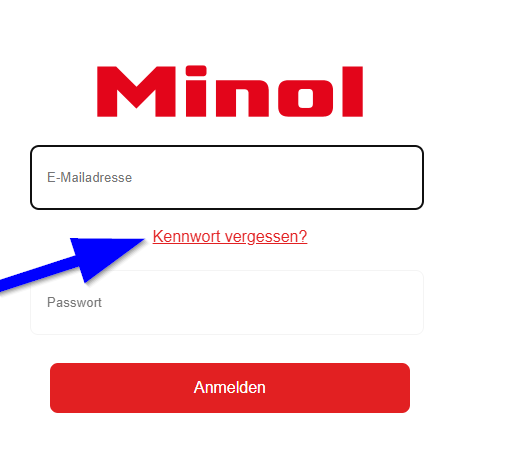
Users can request a new password via the homepage of the online portal ( webservices.minol.com ) or via the app's homepage. By clicking "Forgot password," users can enter their email address and subsequently have a verification code sent to them by email. After successfully entering the verification code, users can then set a new password. If the email is not received within a few minutes, users should check their spam folder.
 nikkimeel – stock.adobe.com /
How does the uVI (uninsured value) reach the actual tenant when using eMonitoring in the case of rented condominiums (WEG)?
In principle, the property manager is free to directly enter the respective tenants as recipients of the interim consumption information in the rights management of the eMonitoring system.
Typically, the property manager doesn't know the actual tenants. Therefore, eMonitoring allows authorized users to set up a "sub-user." This doesn't create any additional work for the property manager. They can simply enter the owners they know. The responsibility for providing the tenant information then shifts to the owners.
Owners can then create a sub-access account for their tenant via their user account in the Minol online portal. They must enter the tenant's email address and specify the period of their access authorization. This information can also be updated in the portal in case of tenant changes. When the owner's access rights are terminated (e.g., upon sale of the apartment), the sub-user's (tenant's) access is automatically revoked as well. The corresponding "User Management" function is accessible to registered users under the "Profile" tab.

What consumption comparisons are possible when users change?
If the occupants of a unit change, comparisons of consumption with the previous month or the corresponding month of the previous year are not possible according to Section 6a Paragraph 2 Number 2 of the German Heating Costs Ordinance (HeizkV). In this case, only a comparison with an average user of the same user category is possible. A comparison with the previous month is then possible for the new occupant from the second month onwards. A comparison with the corresponding month of the previous year is possible only after at least one year and one month with the same occupant.
If the user change has been recorded in the eMonitoring rights management, such comparisons will be omitted from the interim consumption information. If Minol is not aware of any user changes based on the current data, the comparison will be displayed despite the user change.
How can I obtain interim consumption information in paper form?
For property managers and landlords who cannot do without sending monthly consumption reports in paper form, Minol offers a convenient solution. If needed, landlords and property managers can activate the postal delivery of interim consumption reports for individual tenants directly in the Minol rights management system. Printing and postage are then handled by Minol for a fee. It is also possible to integrate the postal delivery of interim consumption reports into the registration process. Users who have not registered after receiving the registration letter and a corresponding reminder letter will then be automatically switched to receiving interim consumption reports by mail.
Of course, the property manager can also handle the postal delivery themselves. In that case, the current interim consumption information can be downloaded directly as a PDF file for the desired resident and the corresponding month.
Why are consumption units and cubic meters converted into kilowatt hours in the interim consumption information?
Heating and hot water consumption is typically measured using heat cost allocators and water meters. These devices display consumption in units and cubic meters. According to Section 6a, Paragraph 2, Sentence 1 of the German Heating Costs Ordinance (Heizkostenverordnung), consumption must be converted into kilowatt-hours (kWh). This conversion is done nationwide using a standardized conversion formula. Property managers and residents can switch between displaying units and kilowatt-hours (kWh) or cubic meters (m³) and kilowatt-hours (kWh) using a corresponding button. This function is available in the eMonitoring system, both in the web view and in the resident app for interim consumption information. The PDF documents only show the legally required consumption in kWh.
Because the building's actual primary energy consumption is not yet known at the time of the interim billing, the consumption figures shown in kWh may differ from those in the upcoming annual statement. This does not disadvantage any resident, as interim consumption information serves only a comparative purpose. It does not determine the amount of the heating and hot water bill.
What solution does Minol offer for property managers and landlords with their own IT solutions for visualizing and outputting interim consumption information?
For property managers and landlords with their own IT solutions for visualizing and distributing interim consumption data to residents, such as third-party portals or the Aareon CRM portal, we recommend using Minol Cloud2Cloud solutions. The Minol Cloud2Cloud solution provides them with consumption data electronically and automatically via predefined interfaces. In addition to standardized interfaces from the German Association for Energy and Water Data Management (bved) and Aareon, the Cloud2Cloud solution also supports a custom interface that can be programmed for exchanging consumption data.
Where can I find further information on interim consumption data (uVI)?
In addition to the frequently asked questions about interim consumption information (uVI) answered here, the GdW Federal Association of German Housing and Real Estate Companies offers a GdW Working Aid 90 – “Implementation of the amended Heating Cost Ordinance 2021” – for download on its website . This publication is free for member companies.

 Jacob Ammentorp Lund – Adobestock
Minol Connect
Why is wireless meter reading worthwhile for landlords and property managers?
By switching to wireless meter reading with Brunata Minol Connect, landlords and property managers increase convenience for their tenants. They also benefit from reduced workload. For example, they no longer need to organize interim meter readings when a tenant moves out: because the wireless system stores the last month-end readings, Brunata Minol can also record all interim readings during the annual meter reading. With the help of eMonitoring , landlords and property managers can continuously monitor and optimize the energy consumption and costs of their properties.
What does IoT mean?
The term "Internet of Things" (IoT) describes the networking of "smart" objects that are installed, for example, in cities, industrial plants, public places, or even private homes and can be activated wirelessly. The countless application areas include, for example, industrial process control, package tracking, safety and driver assistance systems for automobiles, and intelligent energy management technology for homes.
What does LPWAN mean?
LPWAN stands for "Low Power Wide Area Network" and describes a wireless network with a long range and low energy consumption. It connects a wide variety of devices equipped with a corresponding chip. End devices require only low bandwidth and power for data exchange via LPWAN. As a result, they consume little energy and can operate for extended periods on a single battery. This makes LPWAN a suitable transmission technology for the Internet of Things (IoT).
What does LoRa mean?
LoRa stands for Long Range. The LoRa Alliance® is a non-profit organization whose members – including the Minol-ZENNER Group – have set themselves the goal of establishing an open LPWAN communication standard for the Internet of Things. The brand name of the transmission standard is LoRaWAN®. The members of the LoRa Alliance® are actively driving the expansion of the network in many European countries, the USA, South Africa, and parts of Asia, and are sharing their knowledge and experience.
What frequency and transmission rate does Brunata Minol Connect offer?
Brunata Minol Connect devices with LoRaWAN® use the license-free 868 MHz frequency band in Europe. The maximum size of a data packet is technically limited to 59 bytes. This transmission rate is sufficient for energy consumption monitoring and the future control of most smart devices.
What is the range offered by Brunata Minol Connect?
Thanks to LoRa, Brunata Minol Connect offers exceptionally good penetration of walls and masonry, even reaching basements and utility shafts, so typically only one IoT gateway is needed in a building. The transmission range inside and outside buildings depends on the specific conditions on site. Brunata Minol technicians ensure optimal installation of the IoT gateways in every case, so that each end device can reliably transmit its data.
How is the connection established between the end devices?
All Brunata Minol Connect devices are equipped with a unique radio identification code at the factory. Immediately after installation, the devices are activated and then establish their first connection to the network. Device identification takes place in the cloud using a security key. Data from other LoRa devices is rejected.
How does the Brunata Minol Cloud work?
All data packets are forwarded from the IoT gateway to the Brunata Minol Connect network server via the mobile network. The network server identifies authorized devices and removes duplicate data packets if they were forwarded from multiple IoT gateways. From the network server, the data is then forwarded to the Brunata Minol Cloud and decrypted there. The data is now available for use in the various Brunata Minol applications. For example, Brunata Minol's billing software also retrieves consumption data from the Brunata Minol Cloud, as does the customer portal " Brunata Minol direct ".
Which measuring devices are suitable for radio-based meter reading?
Electronic heat cost allocators , heat meters, and hot and cold water meters can be read manually and wirelessly. Household meters, for example for gas, electricity, or district heating, can also be integrated via an external Brunata Minol communication module (such as the PDC communication module ). The prerequisite is that they are equipped with a pulse output that allows the data to be converted into radio signals. Only outdated heat cost allocators based on the evaporation principle and older electronic heat cost allocators are not suitable for wireless reading.
What are Brunata Minol Connect IoT gateways needed for?
An IoT gateway, also known as a modem or access point, receives all LoRaWAN® data from devices, collects it, and transmits it to the cloud server. It functions similarly to a repeater. The best mounting location for an IoT gateway is at the highest point within the building. Basements are often unsuitable because their construction (e.g., fire doors, concrete) can hinder radio signal propagation. A mounting location outside the basement is recommended. Like a DSL modem or Wi-Fi router, an IoT gateway requires very little space. A power outlet with a constant power supply is required for installation.
How many Brunata Minol Connect IoT gateways are needed?
The number of IoT gateways required depends on local conditions, such as building size and number of floors. Typically, only one IoT gateway is needed per building or group of buildings.
Can an existing Connect radio system be connected to a Smart Meter Gateway (SMGW)?
Yes, connectivity to a Smart Meter Gateway (SMGW) is also possible with a Connect radio system installed before 2022. The CLS interface is available on the Smart Meter Gateway (SMGW) for this purpose. Existing Connect meters can be connected to the BSI-certified (Federal Office for Information Security) Smart Meter Gateway via a special Connect Gateway, if required.
What happens to the Brunata Minol Connect IoT gateway during a power outage?
Brunata Minol Connect devices are equipped with long-life batteries that are unaffected by potential power outages. Because data transmission between the devices, IoT gateway, and cloud occurs instantly, and no data is stored in the IoT gateway itself, a short-term power outage at the gateway does not affect data retention. The data in the cloud is backed up multiple times and remains available even if the IoT gateway is temporarily unavailable. Data transmission resumes as soon as power is restored.
As a landlord, do I need the tenants' consent if I want to switch to wireless meter reading?
No, the consent of the other residents is generally not required. The Federal Court of Justice (BGH) has also ruled that tenants must tolerate the installation of modern, wireless meter reading devices (BGH ruling of September 28, 2011, case no. VIII ZR 326/10). The court reasoned that this obligation arises from Section 4 Paragraph 2 Sentence 1 of the Heating Costs Ordinance (HKVO). Furthermore, according to Section 554 Paragraph 2 of the German Civil Code (BGB), tenants must accept measures that serve to improve the rented property. The installation of wireless meter reading devices generally constitutes an improvement in the value of the property, as the rooms no longer need to be entered for meter reading purposes.
Does the radio data collection have any impact on the residents?
The transmission power of wireless meters and smoke detectors is comparable to that of standard garage door openers. The transmission power ranges from 10 to a maximum of 25 milliwatts (mW). In comparison, a standard cordless DECT phone transmits at up to 250 mW. A mobile phone, depending on the network operator and device type, can transmit at 1.000 to 2.000 mW. Minol Connect energy monitoring devices comply with applicable standards and testing requirements. Compliance with the underlying Directive 2014/30/EU (EMC Directive) for electromagnetic compatibility of electrical and electronic products was tested and confirmed as part of the approval process.
How do interim readings work with wireless measuring systems?
A major advantage of the wireless system is that on-site meter readings are no longer necessary for residents. The wireless metering technology records consumption daily, allowing for interim readings at any time. This enables a fair distribution of costs between previous and new tenants.
Are there any restrictions on the use of radio equipment?
Few. Only extreme structural conditions, such as reinforced concrete in the basement or metal doors, can disrupt the transmission of radio signals. Therefore, Brunata Minol technicians check the transmission reliability on-site before installing a wireless system.
What happens if a radio is unreachable?
The detection rate of wireless meters is generally complete. However, should a device fail or a transmission be interrupted, Brunata Minol applies the estimation methods stipulated in the German Heating Costs Ordinance.
How will Brunata Minol Connect develop in the future?
LoRaWAN® technology and Brunata Minol Connect offer the best options from the outset for reliably reading consumption data and status reports from meters and smoke detectors. But Brunata Minol Connect can do even more. Step by step, Brunata Minol will introduce new possibilities built on the LoRaWAN® infrastructure. From energy monitoring systems to the control of smart devices, the possibilities are virtually endless. This holds great potential for homeowners and tenants, as well as for property managers and landlords. Future-proofing is ensured by the monitoring of the LoRaWAN® standard by the LoRa Alliance®, whose more than 500 members support the protocol. Together, they align components, products, and services with LoRaWAN®.
What data is transmitted via Brunata Minol Connect?
Only the data intended for the specific purpose of the device is available. For example, a heat cost allocator transmits the device type, serial number, date, device status, daily value, and annual value. Smoke detectors transmit information about whether the smoke chamber is free of debris, whether the battery voltage is sufficient, whether the device is mounted on the ceiling, and whether there are any objects in the immediate vicinity.
Who can view the data at Brunata Minol Connect?
Brunata Minol has exclusive access to the encrypted diagnostic and meter readings stored in the cloud. Building owners and landlords can also request access to this data, for example, if it is necessary for generating reports on the energy consumption of their own buildings.
Access to this data will only be granted
- within the framework of European data protection regulations or
- If necessary, with the express consent of homeowners and tenants or
- in the case of legal requirements, which may arise, for example, from the EU's EED Directive on interim energy consumption information.
Are the transmitted measurement values tamper-proof?
Yes. The radio data from the measuring devices is transmitted using the proven GFSK modulation method, which is also used in Bluetooth, DECT, and Wi-Fi. Without knowledge of the encryption, the radio data cannot be read by unauthorized persons.
What values are read during radio meter reading?
The wireless meters store the consumption data for the last two billing periods. Up to 19 month-end readings are also available.
What is LoRaWAN?
The LoRaWAN® specification describes a Low-Power Wide-Area Network (LPWAN).
LoRaWAN operates in license-free radio frequency bands and is characterized by a long range of up to 15 km in rural areas, very low energy consumption and the ability to integrate a large number of end devices within a single network.
The system architecture consists of end devices, gateways, network servers and application servers, thus forming the basis for a scalable, flexible network suitable for a wide variety of IoT applications. More information on the Lora Alliance® website.
Real estate services
Legionella test
What is meant by a Legionella test?
In Germany, drinking water is subject to strict quality controls and must not only be constantly tested by the water supplier, but – under certain conditions – must also be tested for Legionella in the building's pipes every three years. These disease-causing bacteria are present in low concentrations in groundwater and can enter the drinking water system from there. Thousands of people in Germany are infected every year – some of them die as a result of pneumonia.
The first Legionella testing in buildings with rented apartments had to be carried out by the end of 2013 at the latest. Experts should be commissioned to perform this testing, as the technical aspects of taking samples are more complex than commonly assumed. Drinking water samples must be taken from at least three locations in the building. Regulations regarding sample transport and temperature must be observed, and all tradespeople, service providers, and laboratories involved in the Legionella testing must be coordinated. Brunata Minol supports you as a landlord and property manager. We ensure that your residents are protected from the health risks posed by Legionella in accordance with legal requirements, while simultaneously reducing your liability risk.
What risk do Legionella bacteria pose?
Legionella bacteria grow in drinking water systems at temperatures between 25 and 55 °C and are transmitted through aerosolized water, for example, when inhaled while showering. An infection can lead to pneumonia requiring treatment. In Germany, approximately 1,7 cases of Legionnaires' disease per 100.000 inhabitants are reported to the Robert Koch Institute (RKI) each year. Since not all cases of pneumonia are tested for Legionella infection, it is assumed that not all cases of Legionnaires' disease are recorded. Accordingly, it is estimated that between 18 and 36 cases of Legionnaires' disease occur annually per 100.000 inhabitants. Five to ten percent of these cases are fatal.
Drinking water in residential buildings also plays a role, as the statistical evaluation of all Legionella tests conducted by Minol shows: Approximately 15 percent of the tested drinking water systems reach the so-called technical action level of 100 colony-forming units (CFU) per 100 ml of water. But Legionella poses a risk not only to health: Anyone responsible – i.e., landlords of certain properties – who violates the requirements of the Drinking Water Ordinance regarding Legionella testing faces fines of up to €25.000 or even criminal prosecution. The same consequences threaten those who disregard reporting, information, or documentation obligations – the results of Legionella tests must be kept for at least ten years. In cases of personal injury, substantial liability claims may also arise. Finally, shutting down a system due to Legionella contamination may also result in lost rental income.
Who is responsible for the Legionella testing?
The landlord is responsible. However, only accredited bodies are authorized to take water samples in accordance with the DIN EN ISO 19458:2006-12 standard. As a partner of the housing industry, Minol has been conducting Legionella testing since 2012 and is very familiar with the requirements. Cooperations with leading laboratory partners guarantee nationwide service availability. Incidentally, landlords can pass on the costs of recurring, preliminary Legionella testing to tenants as operating expenses.
How often is legionella testing required?
Hot water systems subject to mandatory testing had to be checked for Legionella contamination for the first time by December 31, 2013 at the latest, and every three years thereafter.
Which drinking water systems are subject to mandatory testing?
The regulation applies to storage water heaters and central instantaneous water heaters with a storage volume exceeding 400 liters or with more than three liters of water in the pipework between the water heater outlet and the furthest tap. This is generally the case for three-family houses or larger. Single-family and two-family houses are exempt from the inspection requirement.
What should be done if the obligation to test for Legionella cannot be clearly established?
Whether a building is subject to mandatory Legionella testing is generally determined by the Drinking Water Ordinance. If the boiler has a storage volume of more than 400 liters or the pipes contain more than three liters of water, Legionella testing is mandatory. If there is any doubt, the responsible public health department should be consulted. They will then decide whether or not Legionella testing is required.
Are the costs for setting up the sampling points eligible for apportionment?
No. Unlike the preliminary investigation, the creation of the extraction points and the site inspection are one-off services that cannot be passed on to the tenant.
Are the costs of regular Legionella testing eligible for cost recovery?
Regular Legionella testing as part of the hot water supply
According to the prevailing view today, the costs of recurring Legionella testing (also called systemic or orienting Legionella testing) are considered part of the hot water supply costs. Recurring Legionella testing serves to monitor the central hot water system and ensure its operational safety. Therefore, it is now predominantly allocated to hot water costs.
The legal basis can be found in Section 8 Paragraph 2 of the Heating Costs Ordinance (HKVO) in conjunction with Section 2 No. 5a of the Operating Costs Ordinance (BetrKV). The costs of hot water supply that can be passed on to tenants include, among other things, the costs of "monitoring the system" and "testing its operational safety".
As a building owner, can't you take water samples yourself and send them to a laboratory?
No. Only accredited bodies are authorized to take water samples for Legionella testing according to the specifications of DIN EN ISO 19458:2006-12. It's not as simple as it sounds. For example, the samples must be in approved containers and kept under strictly controlled temperature conditions at an accredited laboratory within 24 hours. Sampling is a job for specialists.
From what building size does a legionella testing requirement apply?
Buildings with three or more apartments typically meet the requirements for mandatory Legionella testing. In these buildings, the water heater often contains more than 400 liters of water, or the hot water pipe contains more than three liters of water between the outlet of the water heater and the furthest tap.
At what Legionella threshold is a drinking water installation considered contaminated?
The Drinking Water Ordinance stipulates that the threshold at which technical measures for Legionella eradication must be initiated is 100 CFU per 100 milliliters of water. CFU stands for colony-forming units. In the case of Legionella contamination, countable colonies form on the surface of the culture medium in Petri dishes in the laboratory.
What happens when Legionella contamination is detected for the first time?
If the technical action level of 100 CFU per 100 ml is reached, the laboratory will immediately notify the responsible health authority.
The legislator then requires the operator of the plant to take the following measures:
- Conducting a hazard analysis
- Conducting a further investigation
The necessary action for Legionella eradication ultimately arises from the results of these two measures. In cases of severe contamination, however, the use of the system may also be restricted or completely shut down immediately. Further investigation and a risk assessment can be commissioned separately from Brunata Minol.
If Legionella contamination is confirmed, measures to eliminate Legionella must be taken in coordination with the public health department until the contamination is completely eradicated. As a rule, further follow-up testing is necessary after each remediation measure. This follow-up testing can be commissioned separately from Brunata Minol.
What conditions must be met for taking samples?
Water sampling points must be flame-cleanable according to DVGW (German Technical and Scientific Association for Gas and Water) regulations to kill any externally adhering germs before sampling and thus prevent falsification of the water's germ count. Therefore, faucets should be made of metal and contain no plastics. If the drinking water system requires structural modernization, the costs are eligible for allocation to tenants as modernization expenses.
The biggest challenge in legionella testing in residential buildings is scheduling, as all samples must be taken on the same day. The service provider needs simultaneous access to the hot water storage tank and all apartments that are required to be sampled according to the Drinking Water Ordinance. If individual tenants are not present and samples from alternative apartments on the same riser are not possible, the entire test may have to be postponed.
Who is responsible for documenting the sample collection points?
A minimum of three samples must be taken per system. One sample is required in the hot water pipe at the outlet of the hot water storage tank, and another – in the case of circulation lines – is needed before the pipe re-enters the hot water storage tank. Additionally, one sample is taken at the furthest tap on each riser. Therefore, three samples are required for legionella testing in a building with only one riser. Each additional riser increases the number by one.
How many water samples will be taken?
To ensure regular water samples can be taken from the appropriate locations, a one-time documentation of the sampling points is required. This documentation can be completed by the building owner or their plumbing contractor. The Brunata Minol contract form "Documentation" should be used for this purpose.
Are there rules for taking water samples?
Yes, DIN EN ISO 19458:2006-12 "Water quality – Sampling for microbiological investigations" specifies exactly how sampling must be carried out. The standard contains guidance on planning a sampling program, the procedure for taking samples for microbiological analyses, and for the transport, handling, and storage of samples until the start of the investigation.
Do all samples from a building have to be taken on the same day?
Yes. Samples must be taken at all points in the drinking water supply on the same day. Only then will a complete picture be obtained. Samples taken on different days are not valid.
When is the probability of Legionella contamination particularly high?
If parts of the hot water supply system are not flushed with hot water for an extended period, Legionella bacteria can multiply optimally. This is the case in apartments that have been vacant for a long time, but also in pipes with blunt ends and where previously existing taps may have been decommissioned. Such situations should be avoided altogether.
What should building owners do to prevent Legionella?
The risk of Legionella is reduced if the hot water system is installed and operated according to generally accepted engineering standards. In particular, the prescribed temperatures must be maintained. The entire volume of drinking water should be heated to over 60°C at least once a day (Legionella prevention cycle). Sections of pipe with permanently stagnant lukewarm water and dead legs must be avoided.
Are homeowners' associations also subject to the legionella testing requirement?
Yes, if at least one apartment within the owners' association is rented out. The legionella test must then be commissioned by the owners' association, because the hot water supply pipes typically belong to the common property. If no apartment is rented out, the legionella test can be waived.
Can tenants force their landlords to conduct legionella testing?
Yes. The building or apartment owner is responsible for the quality of the drinking water provided and is obligated to have it tested for Legionella. Tenants have the right to high-quality, clean, and Legionella-free water. Tenants can request the test results from the landlord. Whether a missing Legionella test justifies a rent reduction has not yet been legally decided, but it is likely.
Should the residents be informed about the results of the Legionella test?
Yes, the landlord is obligated to inform their tenants about the results of the preliminary testing. This obligation can be fulfilled by posting the test results in the stairwell. A separate letter to each tenant is not required. Brunata Minol provides the Legionella test results as a ready-to-post document.
Is a drinking water test necessary despite the built-in legionella protection system?
Yes. A legionella control system built into the hot water supply, which heats the water to a high temperature at certain times, serves as a preventative measure and therefore does not replace the mandatory legionella testing.
How long should the results of the Legionella test be kept?
The results must be archived for a period of ten years. Brunata Minol customers can access the test results for at least this period. Users of Brunata Minol online services can download the respective test results from the internet at any time.
 Suzi Media – stock.adobe.com

Energy Performance Certificate
What is an energy performance certificate?

Energy performance certificates provide information about energy consumption per square meter of usable floor space per year and the energy efficiency class of a building, similar to what we already know for household appliances or vehicles. This is intended to give prospective buyers of condominiums and those interested in renting apartments objective information about whether a building has high or low energy consumption. The political expectation is that buildings with poor energy ratings will be identified in order to motivate building owners to undertake energy-efficient modernizations.
Generally, a distinction is made between two different types of energy performance certificates: the consumption-based and the demand-based energy performance certificate.
Where do I get an energy certificate?
We offer energy performance certificates for residential buildings. The easiest and most affordable way to order an energy performance certificate is via our booking page or our customer portal.
Why do I need an energy performance certificate?
Since May 1, 2014, real estate advertisements in commercial media have been required to display various details from the energy performance certificate. The energy performance certificate must be presented to every prospective buyer or tenant of an apartment or house by the seller, landlord, or real estate agent without being requested during the viewing. Once the contract is finalized, the certificate must be given to the tenant or buyer (at least a copy). Tenants in existing leases, however, are not entitled to an energy performance certificate. Therefore, an energy performance certificate is always required when a house or apartment is sold or newly rented.
Energy performance certificate based on demand or consumption – which one do I need?
- Energy performance certificates based on actual energy demand are required for buildings with fewer than five apartments that were built with a building permit before November 1, 1977 and have not been modernized to at least the requirement level of the first Thermal Insulation Ordinance (WSVO) of 1977.
- Consumption-based energy performance certificates are permissible in all other cases, i.e., for buildings with more than five apartments and a building application submitted after November 1, 1977.
How do energy performance certificates based on consumption differ from those based on demand?
- The Energy consumption certificate This takes into account energy consumption data from the last 36 months. The consumption figures reflect, among other things, the influence of the user and the operation of the system, so that energy savings resulting from changes in user behavior or increased efficiency of system operation can be clearly illustrated. The consumption figures are adjusted for climate impact.
- At the Energy performance certificate Following an on-site inspection and recording of building and technical data, the annual energy demand of a building is calculated, taking into account structural and technical characteristics (insulation, building materials, construction method, heating system). This calculation is based on standardized values and boundary conditions – for example, regarding climate and usage patterns.
What is meant by a residential building in the context of energy performance certificates?
Residential buildings are buildings whose primary purpose is residential, including residential homes, retirement homes, nursing homes, and similar facilities. The non-residential component of such buildings, e.g., shops, may be up to 10%. Thus, a residential building with 500 m² can still be classified as such, even if there is a 49 m² shop on the ground floor.
What is a non-residential building?
A non-residential building is a building that cannot be classified as a residential building, e.g. for commercial, freelance, governmental or non-profit activities.
When are multiple energy performance certificates required for a building?
- Mixed-use buildings: Is it a mixed use Buildings The differently used parts of the building are treated as separate buildings. Accordingly, at least one energy performance certificate must be issued for this property, one for residential use and one for non-residential use.
- Buildings with terraced construction: For the following reasons, it is not possible for us to make a general approach as to whether a terraced construction can be considered as one or more buildings.
The procedure for issuing an energy performance certificate, based on the German Building Energy Act (GEG), stipulates that further investigation requires the provision of photographic material and the collection or collection of various details about the property. This information ultimately determines whether there is one or more buildings and whether further information needs to be obtained for the assessment.
For the issuance of energy performance certificates, it is crucial to define what constitutes a building within the meaning of Section 79 Paragraph 2. The definition of a building is derived from the general meaning of the word "building" and the heating and cooling requirements of Section 2 of the German Building Energy Act (GEG). Certain circumstances – usually several together – can be used as indicators to distinguish between buildings, parts of buildings, and apartments.
For example, the following might speak in favor of a building :
- Independent usability, a separable spatial and functional relationship, demarcation by the heat-transferring enclosing surface, own house number, property boundaries, own entrance, separation by firewalls.
Taking into account the aforementioned indications, the following can be said:
- A row of buildings, such as a row of terraced houses, consists of several buildings.
- Identical construction, which is certainly not a given with terraced houses, would not, even if it existed, make several buildings into one building.
- Section 17 of the GEG (German Building Energy Act) stipulates that when buildings are constructed simultaneously in a row, they may be treated as one building with regard to the energy requirements of Sections 12, 14, 15 and 16 of the GEG.
- Section 17 sentence 2 of the GEG stipulates that the provisions of Part 5 concerning the energy certificate remain unaffected by this.
This means that when issuing energy performance certificates, treating a row of buildings as a single building is specifically not intended.
An energy performance certificate must therefore be issued for each individual terraced house . The same applies to two semi-detached houses, even if they share a heating system.
The energy performance certificate must be issued separately for each semi-detached house.
It should be noted that terraced houses and semi-detached houses are often not identical in construction and do not have the same level of modernization. The latter is particularly important with regard to the modernization recommendations in the energy performance certificate, as these recommendations must take into account the potential modernization needs of the respective building.
The assessment of whether a row of multi-family houses constitutes one or more buildings remains a core problem.
Since the facts and definition of the term "building" are not very transparent, the PG-EnEV expert commission for building technology has in the past developed and published a guide/interpretation regarding this topic (interpretation XX-1 to § 17 para. 3 EnEV).
The BBSR (Federal Institute for Research on Building, Urban Affairs and Spatial Development) also takes up the content and points to a differentiated approach, which is also taken into account in our decision-making process.
Alternative: Confirmation from a person authorized under Section 88 GEG
As an alternative to the determination by Minol, you can send us confirmation as to whether there is one or more buildings on your properties that extend over several house numbers.
We welcome this approach, as you and especially your experts are best able to assess your properties based on your detailed knowledge and consideration of the relevant criteria.
However, the confirmation should be signed by a person authorized under Section 88 of the German Building Energy Act (GEG) so that you and ultimately the person signing the energy certificate are acting in accordance with the regulations and, in the event of an inspection (Part 7 GEG) or a challenge by a potential tenant, neither you nor the signatory can be accused of negligence.
What is behind the Building Energy Act?
The new Building Energy Act (GEG) aims to standardize energy conservation regulations for buildings. It has been in force since November 1, 2020. It now combines the Energy Conservation Act (EnEG), the Energy Conservation Ordinance (EnEV), and the Renewable Energy Heat Act (EEWärmeG).
The background to the law is that energy in buildings should be used as efficiently as possible and that renewable energies should be increasingly used.
What has changed in the energy performance certificate since May 2021?
The GEG (Building Energy Act) is not only the legal basis for the energy performance certificate, but also aims to create incentives for improving the energy efficiency of the entire building stock in Germany. With the revision of the legislation in May 2021, the following changes were particularly significant:
- More individualized and precise Modernization recommendationsThe quality of modernization recommendations is to be improved. In this context, we are requesting details about the building's energy performance in the energy performance certificate. In addition, the German Building Energy Act (GEG) requires informative photographs, which we can use to assess the current energy status. Conversely, the energy performance certificate will contain more detailed and informative modernization recommendations.
- Air conditioning: Another new requirement for issuing energy performance certificates: Information on existing air conditioning systems with a nominal output exceeding 12 kW will be requested. This includes the number of units and the due date of the next inspection.
- CO₂ emissions: Greenhouse gas emissions (simply put, CO₂ emissions) describe the climate impact caused by building operation. The CO₂ value is based on the calculation of the energy sources used and is a mandatory piece of information in the energy performance certificate.
What photos do I need to order an energy performance certificate?
Since May 1, 2021, legislation requires that photographs be provided if no on-site inspection takes place. Based on this, Minol includes specific modernization recommendations in its energy performance certificate.
To order a consumption-based energy performance certificate, you should have some photos of the building and its technical systems ready. Alternatively, you can interrupt the ordering process and continue it later when you have the required photos.
Can data capture and photos also be handled by Minol?
Yes, ordering an energy performance certificate is easy with the help of our experts. With just a few clicks, you can order a needs-based energy performance certificate online from us. The data collection will be carried out on-site at the building together with one of our appointed property inspectors.
How long are energy performance certificates valid?
Energy performance certificates are valid for ten years.
A new energy performance certificate is required if the building is recalculated after major renovations and refurbishments in accordance with the Building Energy Act. If only the heating system is replaced, there is no obligation to issue a new certificate. However, we recommend requesting one in this case.
Is my existing energy performance certificate still valid according to the German Energy Saving Ordinance (EnEV)?
A legally compliant energy performance certificate that was issued before May 1, 2021, in accordance with the EnEV regulations, retains its validity period of 10 years.
Why can't an existing energy performance certificate simply be extended, even though Minol already has the information on heating media and quantities?
An energy performance certificate cannot be extended. For new energy performance certificates with a new validity period, the legislator requires a new data collection in accordance with the current regulations of the Building Energy Act (GEG). However, the data on heating media and quantities already available to Minol from the heating bills of the last 36 months does not need to be entered again by you when ordering if you choose the convenient ordering process via the customer portal.
What information is mandatory in the energy performance certificate for commercial real estate advertisements since May 2021?
- The type of certificate: Energy demand certificate or Energy consumption certificate.
- The value of the final energy demand or final energy consumption for the building, This refers to the living area. For non-residential buildings, this information must be listed separately for heating and electricity.
- The main energy sources for heating the building.
- For residential buildings: the year of construction stated in the energy performance certificate.
What happens if I don't have an energy performance certificate and don't want to have one created?
In this case, you can initially omit the energy performance information from the property advertisement. However, you will need an energy performance certificate at the latest by the time of the house or apartment viewing – you must then present this to the prospective buyer or tenant. If an energy performance certificate is not presented at the viewing, you, as the landlord or seller, are committing an administrative offense and risk a fine. Therefore, the energy performance certificate must be issued no later than when the first prospective buyer or tenant contacts you.
Is an energy performance certificate also required for listed buildings?
No. According to state law, listed buildings or groups of buildings are not subject to the energy performance certificate requirement under Section 79 Paragraph 4 of the German Building Energy Act (GEG). To be able to prove this in case of doubt, it is advisable to obtain and keep the official confirmation of the listed building status on hand.
How is a demand-based energy performance certificate created?
A demand-based energy performance certificate (EPC) is prepared based on the condition of the building envelope and the heating system. The calculated energy demand is independent of the residents' behavior. We offer a high-performance alternative with a building inspection and joint data collection on-site with a certified property inspector.
How is a consumption-based energy performance certificate created?
A cost-effective, consumption-based energy certificate or energy pass, based on the data from the last heating bills, is permitted for all multi-family houses with five or more apartments, or for buildings with fewer than five apartments that were built after 1977 or were modernized in accordance with the 1st Thermal Insulation Ordinance of 11.09.1977.
Tenant electricity
How long does a PV system last?
Modern solar power systems have a lifespan of 25–30 years.
How is the tenant electricity price determined?
The price must be at least 10% below the local basic supply tariff, so that it is always cheaper for tenants than standard electricity.
Am I legally required to offer tenant electricity?
Many German states have a requirement for rooftop solar panels, but no requirement for tenants to purchase electricity from their roofs. Tenant electricity is voluntary.
What tax advantages are there?
Photovoltaic systems can be depreciated. A zero VAT rate applies to PV systems up to 30 kWp. Further subsidies are possible.
What happens when a tenant changes?
The new tenant can purchase tenant electricity. All contracts and billing will be adjusted via the Quartierkraft platform.
How does the billing process work for tenants?
Billing is handled automatically via Quartierkraft's digital platform. Tenants receive transparent statements, and changes due to tenant turnover or tariff adjustments are automatically taken into account.
Can tenant electricity also cover common area electricity (stairwell, heating pump)?
Yes. This increases the self-consumption rate and the profitability of the system.
Who is responsible for the maintenance and repair of the solar power systems?
We assist you in finding qualified solar installers who will professionally install your PV system. The contract is made directly between you and the respective solar installer, who is subsequently also responsible for maintenance and repairs.
Your advantage: You can either choose a suitable partner yourself or use our help in finding a suitable solar installer.
Are all tenants required to participate in the tenant electricity scheme?
No. Tenant electricity is voluntary. Tenants who do not wish to participate remain with their regular energy supplier.
Is tenant electricity also worthwhile for small apartment buildings?
Yes. Even with as few as 3 units, tenant electricity can be economically attractive, especially with sufficient roof area and electricity consumption.
What is tenant electricity?
Tenant electricity is electricity generated in the immediate vicinity of the tenants, usually by photovoltaic systems on the roof of a residential building, and supplied directly to the tenants without going through the public grid. Surplus electricity can be fed into the grid. To ensure everything runs smoothly, an intelligent metering and billing system records the consumption of each unit individually. Tenant electricity is particularly suitable for apartment buildings and allows tenants to benefit from green electricity without having to invest in their own system. At the same time, it makes an active contribution to the energy transition.
 Westend61 / Bartek Szewczyk
What do direct consumption, tenant electricity surcharge, residual electricity margin, basic charges and grid feed-in mean?
1. Direct consumption
The electricity your tenants use directly from the rooftop solar panels, without first feeding it into the public grid. You can sell this electricity, consumed directly by your tenants, at a separate price, provided it is 10% below the local basic supply tariff.
2. Tenant electricity surcharge
This is a potential government bonus per kilowatt-hour for the electricity from your own solar system that your tenants consume (direct consumption). You receive this bonus in addition to the sales price.
3. Residual current margin
If your solar panels don't produce enough electricity, you can purchase additional power and resell it to your tenants. You can earn a small margin (the difference between the purchase and selling price) on this "surplus" electricity, so that even electricity you didn't generate yourself can provide extra income.
4. Basic fees
Fixed fees that every tenant pays for electricity, regardless of consumption (often included in the tenant electricity contract). This provides tenant electricity providers (landlords) with stable, regular income, even if consumption fluctuates.
5. Grid feed-in
If more electricity is produced than your tenants consume, the surplus is fed into the public grid. You receive a fixed payment from the grid operator for this.
How can I make money with tenant electricity?
How to make money with tenant electricity
Direct consumption: You can sell the electricity your tenants use directly from the roof. The price must be 10% below the local basic supply tariff, so you generate revenue from every kilowatt-hour your tenants consume.
Tenant electricity surcharge: For every kilowatt-hour of electricity from your PV system, you can receive a legally permissible additional surcharge. This increases your profit without significantly increasing your tenants' payments.
Residual electricity margin: If your system doesn't generate enough electricity, your tenants will draw power from the grid. You can also make a small profit on this by keeping the difference between the purchase price and the selling price.
Basic fees: These are fixed monthly charges that are incurred regardless of electricity consumption. As the system operator, you only pay the basic fee for the electricity connection once. At the same time, all participating tenants pay a monthly basic fee. This generates regular and predictable income, independent of individual electricity consumption.
Grid feed-in: Excess electricity that is not consumed directly flows into the public grid. You receive compensation from the grid operator for every kilowatt-hour fed into the grid.

 Jacob Lund – stock.adobe.com
B.One Guide
What data is needed for the analysis?
The B.One Guide uses your existing consumption data from the Minol system. This means for you: no additional data collection, no manual processing, quick start without extra effort.
How long does the setup take?
The analysis is available immediately after automated data processing. You receive instantly: benchmark comparisons, CO₂ assessments, recommendations for action, and prioritizations.
Who is the B.One Guide suitable for?
The B.One Guide is aimed at all building owners who are seeking a long-term modernization strategy for a single property or an entire portfolio.
It is structured with two levels of usability. This makes it suitable for both beginners without prior knowledge and users who want to carry out detailed and advanced analyses.
Does the B.One Guide help with legal requirements and ESG goals?
Yes. The B.One Guide helps you to make CO₂ emissions transparent, to identify potential savings, and to track sustainability goals measurably. However, the B.One Guide is not a traditional tool for ESG reporting.
Can investments be prioritized?
That's precisely what the B.One Guide was developed for. It shows you which buildings have the greatest need for action, where measures will have the greatest impact, and how investments will affect the economy and the environment.
Is the B.One Guide also suitable for long-term planning?
In addition to short-term optimizations, the guide also supports strategic investment decisions, long-term renovation and decarbonization strategies, as well as the preservation and enhancement of your portfolio's value.
Is there an economic analysis?
The B.One Guide intelligently distributes modernization measures over a period of 20 years, taking into account subsidies, cost savings, and modernization levies.
Is there a trial access to the B.One Guide?
There is no trial access. Instead, you can get a first impression via tutorials in the Minol online portal .
How does this application differ from those of other providers?
The B.One Guide impresses with its depth of application for long-term modernization strategies and the ability to start directly without complex and expensive data collection.
Smoke alarm
What happens if owners ignore smoke detector obligations?
If the state building code mandates the installation of smoke detectors, this is a legally binding obligation for the property owner. Failure to comply is unlawful. However, no fine is imposed for this. The situation becomes more critical if a fire breaks out in a building subject to this requirement, resulting in personal injury. In such cases, the civil proceedings could have far more serious consequences than a mere fine.
Owners' associations: Everyone for themselves or together?
Purchasing smoke detectors jointly offers several advantages for homeowners' associations. Besides the significant cost savings for all owners, the safety aspect is also important. By opting for a shared installation, all apartments are reliably equipped with smoke detectors. If each owner purchases them individually, experience shows that some apartments will inevitably remain unequipped. The resulting safety gaps then affect everyone. If a fire breaks out in an unequipped neighboring apartment, it also endangers the other residents.
Brunata Minol recommends that individual apartment owners only install smoke detectors themselves if the owners' association has decided that each apartment owner is responsible for their own installation. If, however, the owners decide on a communal installation, they do not have to exclude apartments whose owners have already installed smoke detectors themselves (Federal Court of Justice, judgment of December 7, 2018, V ZR 273/17).
Rental apartments: Who installs smoke detectors?
In rented apartments and houses, the installation of smoke detectors is always the landlord's responsibility, according to the regulations of all state building codes. Brunata Minol therefore recommends that tenants inform their landlord of the smoke detector requirement and not install devices they have purchased themselves.
Can tenants refuse the installation of smoke detectors?
The question is unlikely to arise often, since smoke detectors ultimately protect the lives of residents. So why should a tenant object? Nevertheless, the rule is clear: Installing smoke detectors is a modernization measure as defined in Section 555b of the German Civil Code (BGB). The measure serves to improve the rented property and must be tolerated by tenants (Section 555d BGB). If necessary, the landlord must enforce access to the apartment through civil proceedings. The otherwise required three-month notice period for modernization measures under Section 555c BGB does not apply to the installation of smoke detectors, because this constitutes a "minor impact on the rented property" according to Section 555c, Paragraph 4 BGB.
Furthermore, the Federal Court of Justice (BGH) ruled that tenants must tolerate the installation of smoke detectors even if they had previously installed them themselves. State building codes oblige landlords to install smoke detectors. In return, tenants must allow their installation. The fact that they have already installed their own does not change this fundamental principle. The BGH reasoned: "Because the installation and subsequent maintenance of the smoke detectors for the entire building are 'in one hand,' a high level of safety is guaranteed, leading to a lasting improvement even compared to a situation already achieved by installing smoke detectors chosen by the tenant themselves." (BGH, judgments of June 17, 2015, case numbers: VIII ZR 216/14 and VIII ZR 290/14)
The Federal Court of Justice (BGH) ruled similarly for owners' associations. Individual owners cannot evade the obligation to provide communal equipment, even if they have already installed their own smoke detectors (BGH, Judgment of December 7, 2018, V ZR 273/17).
Does the obligation to tolerate such installations also apply to wireless smoke detectors?
The Federal Constitutional Court has ruled that the installation of wireless smoke detectors does not constitute a violation of general personal rights and must be tolerated by tenants. The plaintiff's fear of a violation of fundamental rights due to potentially spying smoke detectors could not be proven. On the contrary, the installation of wireless smoke detectors serves the safety of the residents. The resulting possibility of remote inspection offers advantages for the residents (Federal Constitutional Court, decision of December 8, 2015, case no. 1 BvR 2921/15).
Who installs smoke detectors in their own single-family home?
In a single-family home, installing smoke detectors is solely the responsibility of the owner. Install smoke detectors in bedrooms, guest rooms, and children's rooms, as well as in escape routes leading to the front door. In a single-family home, also install at least one smoke detector at the highest point of the stairwell. Ideally, you should also equip rooms that are only occasionally used for sleeping with smoke detectors. Smoke detectors in the kitchen, bathroom, and toilet are not recommended.
Buying smoke detectors: Should you increase the rent or not?
The obligation to equip apartments with smoke detectors lies with the owner. Theoretically, the costs for purchasing and installing smoke detectors entitle the landlord to a rent increase of 8% of the purchase price, based on the annual net rent. However, experience shows that in most cases, the monthly rent increase for an apartment due to smoke detector installation would be so minimal—only one to two euros per apartment—that most landlords forgo the right to a rent increase and instead absorb the relatively small costs themselves.
Are the costs for renting smoke detectors eligible for allocation to tenants?
For years, conflicting regional court rulings existed regarding the allocation of rental costs for smoke detectors. In one case (Magdeburg Regional Court, 2011), the possibility of allocating these costs was upheld, while in another (Hagen Regional Court, 2016), it was denied that rental costs for smoke detectors constituted other operating costs within the meaning of Section 2 No. 17 of the German Operating Costs Ordinance. In May 2022, the Federal Court of Justice (BGH) issued a final ruling: Rental costs for smoke detectors cannot be allocated to tenants as operating costs (BGH, Judgment of May 11, 2022, VIII ZR 379/20). This renders any conflicting agreements invalid.
Rental costs for meters for heating and hot water, on the other hand, are clearly eligible for allocation.
Are the costs for the regular testing and ensuring the operational readiness of smoke detectors eligible for allocation to tenants?
Smoke detectors must be tested for functionality once a year in accordance with DIN 14676 No. 6. This functional test is carried out either by a visual inspection on-site in the apartment or – in the case of appropriately equipped wireless smoke detectors – by remote inspection from outside the apartment. Both methods verify that the smoke entry openings are unobstructed and that the devices have not been covered or removed from the ceiling. The proper technical function of the device is also checked, either by a manual test or, in the case of wireless remote inspection, by electronic sensors.
The costs for the regular inspection and maintenance of smoke detectors installed in rented premises are operating costs within the meaning of Section 2 No. 17 of the Ordinance on the Establishment of Operating Costs (BetrKV – other operating costs) and are therefore generally chargeable to the tenant. The Federal Court of Justice (BGH) has repeatedly ruled that operating costs incurred due to modernization measures that the tenant is obligated to tolerate may be passed on to tenants, even if this is not explicitly stipulated in the lease agreement (e.g., BGH ruling of October 5, 2022, VIII ZR 117/21 ). For new leases, Minol recommends that landlords explicitly include the item "costs for the maintenance of smoke detectors" in the lease agreement to eliminate any ambiguity. Ideally, these costs should be allocated according to the living space, the typical allocation key for non-heating operating costs under the German Civil Code (BGB).
Which buildings should be equipped with smoke detectors?
State building codes mandate the installation of smoke detectors in apartments. Smoke detectors are suitable for use in residential buildings and spaces with similar uses, such as offices, law firms, or medical practices. They are not suitable for bakeries, retail stores, restaurants, or underground parking garages.
What are the advantages of optimal smoke detector equipment compared to minimum equipment?
With optimal or full equipment, smoke detectors are installed not only in the already required bedrooms, children's rooms, and hallways that serve as escape routes, but also in living rooms and offices. We particularly recommend optimal equipment when installing wireless smoke detectors, but not exclusively.
- Is a unit of use not If the apartment is fully equipped with wireless smoke detectors, the owner must submit notifications of any change of use within the apartment in order to comply with the testing requirements according to DIN 14676-1.
- Statistically, one third of all house fires are caused by electrical defects, meaning the risk of fire is particularly high in living rooms, for example.
- If a fire breaks out in the living room, office, etc., smoke detectors only sound the alarm once the smoke reaches the hallway or bedroom. However, this typically leaves a maximum of four minutes for rescue. This can be fatal, especially for people with physical limitations, even though optimal equipment might have prevented this.
- Berlin and Brandenburg have followed the recommendation that smoke detectors should also be installed near potential fire hazards to enable earlier detection and thus more time for self-rescue. Specifically, in these two states, which were the last to introduce mandatory smoke detectors, all living spaces and hallways that serve as escape routes from such rooms must be equipped with smoke detectors.
The level of security within the property therefore increases in any case, and all smoke detectors installed in the apartment serve to protect the residents in the event of a fire.
Which rooms absolutely need smoke detectors?
According to the application standard DIN 14676, smoke detectors are a minimum requirement in children's rooms and bedrooms, as well as in hallways that serve as escape routes. For optimal installation, smoke detectors are also recommended in the living room and – if available – in the study or guest room.
Is the landlord required to install special smoke detectors for deaf or hard-of-hearing tenants?
All state building codes stipulate that the minimum protection provided by the owner includes smoke detectors compliant with DIN EN 14604. Therefore, the owner is not obligated to install additional technical equipment for deaf or hard-of-hearing tenants. They may, of course, do so, but are not required to.
Will I lose my insurance coverage if no smoke detectors are installed?
It is often said that insurers might reduce their payouts from homeowners' insurance policies in the event of a fire if smoke detectors are not installed in a state where they are mandatory. This question cannot be answered definitively with a simple yes or no. For example, the Bavarian Insurance Chamber explains that a reduction in payouts is possible if it can be proven "that the damage to the building or its contents was greater due to the absence of smoke detectors than it would have been with installed devices." The Insurance Messenger, a trade magazine for insurance brokers, writes: "The general terms and conditions of homeowners' insurance policies explicitly state that coverage is void as soon as a policyholder violates legal regulations, such as the smoke detector requirement." To be absolutely certain, it is best to ask your insurer. Of course, homeowners are even safer if they simply install smoke detectors. Then the question of potentially missing insurance coverage doesn't even arise.
What to do in case of false alarms from smoke detectors?
A smoke detector triggers an alarm when condensate, smoke, or dust particles enter the smoke chamber in a certain concentration. This can happen during renovations when drilling or grinding generates increased amounts of fine dust, when increased smoke is produced while cooking, or when water vapor from the kitchen or bathroom enters rooms equipped with smoke detectors.
In case of an unwanted alarm, the smoke detector can be silenced using the central alarm stop button. This can also be done with a broom handle, for example. The smoke detector remains active, but its sensitivity is reduced for ten minutes. To prevent another false alarm, it is recommended to ventilate the apartment after a false alarm.
Unlike a false alarm, a false alarm is triggered by a technical defect in the device or the failure of a component. With high-quality smoke detectors, the probability of false alarms is rather low. Any smoke detector that is not functioning properly should be replaced immediately.
Who pays the costs of the fire department in the case of a false alarm?
The mere dispatch of the fire department generally does not result in any costs for the person responsible for a false alarm. Only the actual firefighting operation on site can become expensive. For example, the Bavarian Administrative Court ruled in its judgment of June 27, 2012 (Case No. 4 BV 11.2549) that the fire department's on-site investigation to determine whether it is a genuine fire or a false alarm cannot yet trigger any costs. As purely warning devices, smoke detectors cannot, in principle, trigger direct alarms and therefore cannot cause false alarms to the fire department. Consequently, the question of cost reimbursement under Section 34 Paragraph 1 Sentence 2 Number 5 of the Fire Service Act (FwG) does not arise.
The fire department is usually alerted by a person who hears the signal from a smoke detector. If this results in a false alarm, cost reimbursement is not governed by Section 34 Paragraph 1 Sentence 2 Number 5 in conjunction with Paragraph 2 Number 5 of the Fire Service Act (FwG). The person who triggered the alarm is only liable for costs if they can be accused of intent or gross negligence in failing to recognize the facts (Section 34 Paragraph 1 Sentence 2 Number 6 FwG).
What distinguishes false alarms from deceptive alarms?
False alarms can occur in smoke detectors if one or more components of the device are defective.
False alarms can occur if foreign objects such as tiny insects, dust, or excessive water vapor from the bathroom, shower, or kitchen enter the measuring chamber. This also causes light scattering within the chamber, which can trigger an unwanted alarm.
Can any smoke detector be installed?
No. Requirements for the technical specifications of smoke alarms are regulated by the product standard DIN EN 14604. In Europe, only smoke alarms certified according to DIN EN 14604 have been permitted to be sold and installed since 2008. Brunata Minol smoke alarms naturally meet all quality requirements.
Do smoke detectors also react to heat?
Yes, but not all. Only high-quality smoke detectors, such as the Minoprotect devices used by Brunata Minol, supplement the optical detection method with a temperature sensor. These smoke detectors provide highly reliable warnings even in fires with a lot of heat and relatively little smoke.
Why is the LED flashing on the smoke detector?
The indicator light shows that the smoke detector is functioning correctly during normal operation. Everything is working properly if the indicator light flashes briefly every 40 seconds. On models from Minoprotect 3 onwards, the indicator LED is dimmed at night and therefore less bright. The Minoprotect II networked alarm model only emits LED signals in the event of an alarm.
How can you test smoke detectors yourself?
It's very simple: just press and release the test button in the middle. Three consecutive beeps and a rapidly flashing LED confirm that the smoke detector is working correctly.
How long does the battery last in Brunata Minol smoke detectors?
Simply because it's safer, all Brunata Minol smoke detector models are equipped with long-life batteries. The smoke detector reliably warns of smoke and heat throughout its entire operating life of at least ten years. A battery change is not required during the detector's lifetime. Furthermore, the battery is permanently installed. A replaceable battery could be removed and misused. The smoke detector would then fail to warn in an emergency, endangering the lives of the occupants. With permanently installed long-life batteries, this is impossible.
When do installed smoke detectors need to be replaced?
The application standard DIN 14676-1 stipulates that the intended service life of smoke detectors must be monitored. According to this standard, the manufacturer specifies the service life of smoke detectors. Therefore, the installed smoke detector type and the manufacturer's specifications are crucial. However, according to the standard, a smoke detector may only be in use for a maximum of 10 years plus 6 months from the date of commissioning and must be replaced at the latest after this period.
What if the smoke detector battery fails?
Brunata Minol smoke detectors feature high-quality, long-life batteries designed for a ten-year operating time. So the battery won't run out quickly. However, should unforeseen circumstances cause the battery to run out sooner, the detector's self-diagnostic function will detect this. The smoke detector will then emit a special low-battery signal in good time. The remaining battery voltage will be sufficient for at least 30 days. This provides ample time to contact customer service to replace the detector.
Should I remove my Minol smoke detector if it malfunctions?
Smoke detectors must remain mounted on the base plate; only then will they warn of danger. Therefore, please do not remove your smoke detectors. Should you consider removing them due to a malfunction, please report this immediately to Minol Customer Service. If a fault message is present, it can be silenced for up to 65 hours on Minol smoke detectors by pressing the test button in the center of the detector. It is therefore recommended that you leave the detector on the ceiling and silence it periodically until the device is replaced.
How loud are smoke detectors?
To put it simply: it's quite loud. More precisely, the sound pressure level is 85 decibels. And that's a good thing, because in case of danger, the smoke detector is meant to wake you even from a deep sleep. For comparison: 80 to 100 dB(A) is roughly equivalent to the noise level of a chainsaw or angle grinder at close range.
Can smoke detectors spy?
No, Brunata Minol smoke detectors definitely do not contain cameras or microphones. Brunata Minol wireless smoke detectors are approved according to the device standard EN 14604:2005 and certified by the independent Kriwan Test Centre (1772-CPR-140157). Infrared sensors built into the device detect whether the smoke inlet opening is blocked or whether objects within a radius of at least 50 cm are obstructing smoke entry. During remote inspection, all relevant data is read out. The logged data is strictly regulated, documented, and protected against unauthorized access. The legality of this procedure has been confirmed by an audit conducted by the Data Protection Commissioner of the State of Lower Saxony. Therefore, you can be confident that the residents are not being spied on or that the collected data is not being misused.
Does wireless smoke detectors emit electromagnetic radiation?
Like wireless heat cost allocators and water meters, wireless smoke detectors also transmit with relatively low power, similar to a wireless PC mouse or Bluetooth headphones. Based on the power output data, it can be calculated that a half-hour phone call with a standard mobile phone generates more radio frequency radiation than ten wireless measuring devices and smoke detectors could in two thousand years.
Are there smoke detectors for deaf people?
For deaf or hard-of-hearing people, there are special Brunata Minol smoke detectors that, in case of alarm, additionally warn of the impending danger with a flashing light on the bedside table and a shaking element under the pillow.
Should smoke detectors be removed if you are going to be away for an extended period of time?
No. Even during extended absences – for example, while on vacation – it is not necessary to detach smoke detectors from their mounting plates. Smoke detectors should only be removed from the ceiling if they are malfunctioning and emitting an audible alarm. Furthermore, detached wireless smoke detectors will trigger an error message during remote diagnostics, unnecessarily prompting service personnel to inspect the installation on-site.
Why do you actually need professionals to install smoke detectors?
The legal requirement for smoke detectors involves more than meets the eye. The proper installation and maintenance of smoke detectors is regulated by the application standard DIN 14676-1. This standard also specifies how smoke detectors should be installed in narrow hallways, rooms with platforms and galleries, and on sloping ceilings. The service standard DIN 14676-2 further defines the specific professional requirements for individuals responsible for the planning, installation, and maintenance of smoke detectors. Brunata Minol service technicians are, of course, certified smoke detector specialists.
Couldn't the janitor handle the assembly and maintenance?
Significant quality differences exist not only in the devices themselves. Planning, installation, maintenance, and the regular training of service personnel should also be carried out in accordance with the DIN 14676 standard. This belongs in competent hands. Landlords and property managers are on the safe side if the service provider specializes in smoke detectors. Here, too, they can look for a quality logo: "Q – Certified Specialist for Smoke Detectors" signifies installers and companies that are specifically trained in handling smoke detectors, such as those from Brunata Minol.
Who checks that smoke detectors continue to function properly?
Smoke detectors must be tested annually in accordance with the application standard DIN 14676-1. While some state building codes generally allow owners (i.e., tenants) to ensure the operational readiness of smoke detectors themselves, this is not an ideal solution, as not every tenant can be expected to perform the necessary tasks and be familiar with the requirements of DIN 14676-1. Only the Brunata Minol smoke detector service offers true safety for all residents. Brunata Minol handles the annual maintenance according to DIN 14676-1 and documents it in a legally compliant manner.
Why is smoke detector maintenance even necessary?
The initial professional installation of smoke detectors does not guarantee permanently trouble-free operation. Therefore, smoke detectors must be inspected at least once a year in accordance with DIN 14676-1. This inspection includes checking, for example, that the detectors are still mounted on the ceiling and undamaged. The inspection also includes checking the distance of the smoke detectors from furnishings and walls, as well as a functional test.
Why does Brunata Minol document the annual smoke detector maintenance?
In the event of damage, landlords must be able to prove that they have fulfilled their legal obligations. With Brunata Minol's documentation for appliance installation and maintenance, you can do this at any time. The documentation includes functional test reports, which are also available online in the Brunata Minol customer portal for at least ten years. If something does happen, the landlord can provide complete proof that the appliances were in good working order. Better safe than sorry!
In which rooms are smoke detectors less useful?
It is not recommended to install smoke detectors in bathrooms and kitchens. Even under normal conditions, dust, smoke, and steam can develop there and trigger false alarms.
Smoke detectors in stairwells: yes or no?
No state building code requires the installation of smoke detectors in stairwells. In apartment buildings, smoke detectors in stairwells are only recommended if all residents are always informed about the correct procedures in case of fire. Fire departments advise staying in your apartment if there is a fire in the stairwell. Otherwise, smoke detectors in the stairwell could cause residents to flee into the stairwell and thereby endanger themselves. However, in the stairwells of single-family homes, a smoke detector on the top floor is advisable.
At what point on the ceiling should smoke detectors be mounted?
Smoke detectors should generally be installed in the center of the room. However, it is also important that the detectors maintain a minimum distance from walls and cabinets. The exact installation guidelines are specified in DIN 14676. It is best to leave the professional installation to the certified experts at Brunata Minol.
How are smoke detectors installed safely?
Brunata Minol offers two mounting techniques: drilling and anchoring, and adhesive mounting. Drilling is a dust-free process using a high-performance cordless tool, eliminating the need for electricity in the home. A current and metal detection check is always performed before installation. Depending on the specific situation or personal preference, mounting can also be done using high-strength industrial adhesive pads.
The apartment or house is very spacious. How can you ensure that you will still be alerted in case of a fire in a distant room?
In such cases, Brunata Minol Minoprotect II interconnected smoke detectors are recommended. These are particularly suitable when detectors installed in more distant areas of the building might be missed in the event of an alarm. With the Minoprotect II interconnected system, all linked smoke detectors are activated wirelessly within seconds in the event of a fire. This ensures that residents are alerted in time to fires that may originate, for example, in unoccupied parts of the building. Groups of interconnected detectors are only used in clearly separated areas of a building, such as stairwells, common areas, or even self-contained apartments.
How can you avoid having to schedule an inspection appointment at your apartment?
The annual on-site inspection of the apartment is unnecessary when using wireless smoke detectors . Brunata Minol performs the annual inspection of the Minoprotect wireless detector remotely, in accordance with the requirements of DIN 14676-1. This process reads out key device parameters such as the degree of contamination in the smoke chamber, blockage detection, and battery voltage. The system can also detect whether the detector has been removed from the ceiling, as well as objects within a radius of at least 50 centimeters that could obstruct smoke entry. Equipping your apartment with wireless detectors is particularly advantageous if the meter readings in the apartment are already taken wirelessly or are planned for the near future.
Who should you contact in case of a smoke detector malfunction?
When Brunata Minol is contracted to maintain the smoke detectors, a 24-hour hotline is available for homeowners and tenants. Malfunctions can be reported there, and advice on how to use smoke detectors is provided. This relieves property managers and landlords of the burden of handling smoke detector-related inquiries. Only standard landline charges apply for using the hotline; there are no costs for property managers or landlords.
 fizkes – stock.adobe.com
 standret – stock.adobe.com
Electromobility
Can I charge the company car at work?
Yes, if your employer equips parking spaces with charging infrastructure. We are happy to assist you with this. Your employer can then offer you, as an employee, special rates or even free charging at the company's own charging station or wallbox.
The charging process can be uniquely identified and assigned via the charging card.
Does my employer have access to my charging processes?
Yes. Similar to a company car with a combustion engine, the employer bears the costs for your charging processes and therefore receives a transparent overview of the charging processes billed.
Can I charge my company car at home?
Yes, this is generally possible. If you own your own property, you can simply purchase a charging station. Often, the employer covers the costs. This charging option should be equipped with an integrated billing system. This means the charging station (wallbox or charging column) is equipped with a SIM card, all charging sessions are recorded and displayed in a web portal. You can then export a statement from there and submit it to your employer.
Which network does the SIM card connect to?
The SIM card automatically selects the best network available locally.
Are there any ongoing costs for the SIM card?
There are monthly costs for connecting a charging station to the internet.
How do I charge my electric car when I'm on the go?
Simply use your Minol Drive charging card to charge at your workplace. The Minol Drive charging card also gives you access to tens of thousands of charging points (charging stations and wallboxes) across Germany and Europe.
What are the options for charging an electric car?
There are various charging options for electric vehicles – depending on the location and the technical requirements of the electricity and grid connection. These include charging stations in public spaces or private wallboxes at home.
What does AC charging mean?
AC stands for Alternating Current . AC charging involves charging an electric car with alternating current. Since the vehicle battery requires direct current, a rectifier in the car converts the alternating current into direct current.
How long does it take to charge an electric car?
Charging time depends on several factors – for example, the car model, battery capacity, and the charging method used. Generally speaking, the higher the charging power, the shorter the charging time.
What is the difference between AC and DC charging?
At the AC charging The conversion of alternating current to direct current takes place within the vehicle itself.
At the DC-Laden (DC charging) the charging station takes over this conversion, whereby the vehicle is charged directly with direct current – this enables significantly higher charging speeds.
Can all electric cars be charged at DC charging stations?
No, not every electric vehicle is designed for DC fast charging. It depends on the specific model and the charging technology used.
Legal requirements
E-bill
Which e-invoice formats does Brunata Minol offer?
Brunata Minol can send e-invoices in ZUGFeRD and X-invoice format.
What is an e-invoice?
An e-invoice (electronic invoice) is an invoice that is created, sent, and received in an electronic format. It replaces the traditional paper invoice and offers several advantages, such as faster processing, lower costs, and a more environmentally friendly solution. E-invoices can be created in various formats, such as ZUGPFeRD and XRechnung. We transmit them via email.
How much does an e-invoice cost?
Receiving an e-invoice is free of charge for you.
What are the advantages of an e-invoice?
Besides legal certainty, e-invoicing offers further advantages:
- faster invoice processing
- less manual effort
- resource-saving, paperless working
- improved traceability and archiving
How can I receive and read an e-invoice?
All you need is an email account to receive our e-invoices.
- ZUGFeRD invoices They contain a normal PDF file that you can open and read as usual.
- XRechnungen These are pure data files in XML format. To open them, you can use, for example, the free ELSTER Viewer or accounting software.
Who is required to receive an e-invoice? And are there any exceptions?
Since January 1, 2025, companies must be able to receive e-invoices. From January 1, 2027, they are also obligated to issue invoices electronically.
For the housing industry, it is important to emphasize that entrepreneurial status is established regardless of the size of the property portfolio or actual VAT liability. Even renting out a single apartment is sufficient to establish entrepreneurial status within the meaning of the VAT Act. This applies equally to private landlords, condominium owners' associations, and landlords of commercial properties.
When will Brunata Minol switch to e-invoicing?
Brunata Minol will fully switch to sending e-invoices by the fourth quarter of 2026 at the latest. From January 1, 2027, e-invoicing will be legally mandatory for all B2B invoices.
What do I need to do to switch to e-invoicing?
You can easily order the switch online. Use the following link: minol.de/e-rechnung
What information does Brunata Minol need to switch to e-invoicing?
In order to switch you to e-invoicing, we need:
- Your email address for invoice delivery
- the desired invoice format (ZUGFeRD or XRechnung)
For public sector clients, we also need the routing ID and information about the relevant invoicing portal.
What is a routing ID?
The routing ID is a unique number used to address electronic invoices to public sector clients in Germany. It functions like a digital address and ensures that your invoice is reliably forwarded to the correct department.
I registered on the website and did not receive an email.
Please check your spam folder first. If you haven't received an email there either, please contact us directly. We will assist you immediately.
I registered and still received my invoice by paper.
The switchover will take place within 24 hours. In rare cases, the invoice delivery and the switchover may overlap. You will, of course, receive your future invoices electronically.
Why does e-invoicing affect me as a customer?
For the housing industry, it is important to emphasize that entrepreneurial status is established regardless of the size of the property portfolio or actual VAT liability. Even renting out a single apartment is sufficient to establish entrepreneurial status within the meaning of the VAT Act. This applies equally to private landlords, condominium owners' associations, and landlords of commercial properties.
 gradyreese – istock.com
 Alex from the Rock – Adobestock
CO2-Cost Sharing Act
Which heating media are affected by the CO₂ cost sharing law?
The law defines all heating media relevant for which standard values for emission factors have been established in accordance with Section 7, Paragraph 4 of the Fuel Emissions Trading Act. The list of factors can be found in the EBeV 2030 (Emissions Trading Ordinance 2030). This typically includes heating oil, gas, coal, and district heating. Heating media such as electricity, biogas, or wood are not included. This does not mean that these heating media have no CO₂ emissions or emission factors, but there is no emissions trading for them.
For which time periods does the CO₂ cost sharing law apply?
The law applies to billing periods beginning on or after January 1, 2023. If the billing period is, for example, "July 1, 2022 to June 30, 2023," the CO₂ cost sharing law does not yet apply. Note: The decisive factor is the agreed billing period, not the billing period of the energy provider.
How do I know if I am affected by the exemptions?
Exceptions are stipulated in Section 2 Paragraph 3 and Section 9 Paragraphs 1 and 2 of the CO₂ Cost Allocation Act (CO₂KostAufG). An exception under Section 9 Paragraph 1 can be justified, for example, by historic preservation regulations or mandatory connection and usage requirements. The latter could be the case if building regulations or the building permit require a mandatory connection to the heat supply. We cannot tell you whether you can make use of any of these provisions. If you are unsure, we recommend that you contact the relevant city or municipal administration directly.
How are different building situations handled?
Generally, heating costs are billed per heating system, regardless of how many buildings are connected to it. This is stipulated in the Heating Costs Ordinance, which in turn is referenced in Section 5 of the CO₂ Cost Allocation Act. The metering service companies organized within the bved (German Association of Metering Service Providers) agree that a distribution at the building level is hardly realistic/feasible in various scenarios, or only achievable with enormous (uneconomical) effort. This is particularly true since the metering service providers typically receive the data (fuel types, etc.) for a single heating system at the property level. Consequently, we can only consider one scenario from the CO₂ Cost Allocation Act.
This means you must choose a configuration. One recommendation might be to choose the most prevalent configuration based on the proportion of floor space. Ultimately, how you implement this and demonstrate it to your residents is your responsibility.
This applies to the following situations:
- Residential buildings vs. non-residential buildings.
- Condominium owners' association vs. rental management.
- Different levels of renovation vs. classification by stage.
- Exceptions according to § 9 para. 1 + 2 (e.g. mandatory connection/ monument protection).
How should I proceed if only part of the building is a listed building?
The decisive factor for a reduction in the landlord's share of CO₂ costs is whether the historic preservation regulations are designed in such a way that they prevent a significant energy improvement of the building.
Example: Only the facade of a larger building is a listed building. The roof surfaces, the remaining exterior surfaces, windows and basement ceiling can be renovated to improve energy efficiency, resulting in expected energy savings of more than 50% of the previous fuel consumption.
In this case, the preservation of historical monuments does not preclude a significant energy improvement of the building; the reduction of the landlord's share of the CO₂ costs is, in the opinion of the member companies of the bved, not justified.
Regulations for district heating connections after 01.01.2023?
If your property was first connected to a district heating system after January 1, 2023, you are exempt from the obligations under the CO2 Cost Allocation Act (CO2KostAufG) according to Section 2. However, if the initial connection took place, for example, on July 1, 2023, and heating was provided by a fossil fuel until that date, the CO2 cost allocation for the period from January 1, 2023, to June 30, 2023, must be carried out in accordance with the provisions of the CO2 Cost Allocation Act (CO2KostAufG).
However, if there are multiple buildings, and one or more of the buildings already have a connection, then according to the bved (formerly according to the ARGE HeiWaKo), this exception cannot be applied. The situation is similar with regard to mandatory connection.
Where can I find the necessary information?
According to Section 3 of the CO₂ Cost Allocation Act (CO₂KostAufG), energy suppliers are required to include the necessary information on their invoices from January 1, 2023, to December 31, 2023. This includes the CO₂ quantity in kilograms, the CO₂ costs, the calorific value-related emission factor, and the energy content of the invoice. If this information is not included on your energy supplier's invoice, please contact them directly.
How is CO₂ calculated?
The CO₂ emissions are calculated by multiplying the calorific value-based emission factor by the energy consumption (also calorific value-based). The CO₂ costs are calculated by multiplying the fixed price per ton by the CO₂ emissions. The total energy consumption, including hot water, must be taken into account. However, this calculation is already performed by the energy provider.
How is the classification carried out according to the tiered model?
The classification is based on the building's living space and the CO₂ emissions for the heating season as shown on the bill. You can find more information in our blog post " Implementation of the CO₂ Cost Allocation Act in Heating Billing ".
How is the classification into levels carried out for shortened time periods?
The classification is based on the amount of CO₂ emitted and the building's living space. If the billing period is shorter, the amount of CO₂ emitted will be lower, but the living space will remain the same. This would distort the result. Since the classification table is designed for 365 days, the values in the table must be calculated proportionally for the shortened period. § 5 para. 1 sentence 4 CO₂KostAufG.
What are the standard emission factors?
The emission factors are defined in the EBeV 2030 regulation. According to the CO₂KostAufG, the factors must be specified in kilograms and based on calorific value:
Heating oil | = | 0,2664 kg CO₂ per kWh |
Natural gas | = | 0,2009 kg CO₂ per kWh |
Liquid gas | = | 0,2358 kg CO₂ per kWh |
District heating | = | none, it is determined differently for each heating plant |
How are CO₂ costs determined for heating media with storage?
For heating media with storage, energy costs are correctly determined according to the first-in, first-out (FIFO) principle . CO₂ costs and CO₂ consumption are determined using the same method. This method also requires knowledge of the initial stock level.
Here's an example: If the billing period is in the calendar year 2023 and there are receipts (e.g., heating oil invoices) dating back to 2022 or earlier, then the energy consumption and energy costs are also based on the receipts from 2022, which are applied in 2023 according to the FIFO principle. Logically, the CO₂ costs and CO₂ quantity included therein must also be considered. However, there is an exception: for all invoices issued before January 1, 2023, no CO₂ costs need to be allocated. If only receipts issued before 2023 were relevant for the calendar year 2023, then no CO₂ cost allocation would be performed for 2023. Nevertheless, determining the CO₂ quantity is necessary for the tiered allocation procedure. Minol will determine the initial balance and the remaining balance for you based on the information you provide.
Why was there no tiered classification for heating oil for the period 2023?
Provided that consumption is fully calculated from the initial stock, no CO₂ costs are incurred for the heating period according to the FIFO calculation.
How is the cost divided among the tenant?
The tenant's share and the landlord's share of the relief amount are determined according to the specifications of the heating bill. This means that the allocation is first based on the proportions of heating and hot water costs, and then according to the applicable distribution key, based on basic and consumption costs. The relevant floor area from the heating bill is taken into account in this process.
What happens if I don't comply with the legal requirement?
Section 7, paragraphs 1 and 2 of the CO2 Cost Allocation Act (CO2KostAufG) stipulates that the allocation of heating costs between tenant and landlord must be carried out within the framework of the annual heating cost statement, and the basis for calculation for the tenant must be shown. This must also include the tenant's share. If this is not done, or if the basis for calculation is missing, the tenant has the right to a 3 percent reduction in heating costs according to Section 7, paragraph 3 of the CO2 Cost Allocation Act. This right to a reduction applies cumulatively to the reduction rights already provided for in the Heating Cost Ordinance.
How is the living space determined or handled?
The building's living area is defined in law as the basis for its classification. Heating cost statements often use the usable floor area or the heated usable floor area. These area designations are defined differently in the German Residential Floor Area Ordinance (WoFlV).
Minol will pre-determine the usable floor space or heated floor space, as we do not know the actual area specified by the customer. This information must first be checked and confirmed by the customer.
A mixed-use building is considered a residential building if residential use predominates (according to Section 6 Paragraph 1 of the CO₂ Cost Allocation Act in conjunction with Section 3 Paragraph 1 No. 33 of the Building Energy Act). All floor areas must be taken into account, and "predominates" in this context means that residential use accounts for more than 50 percent. If the residential area is smaller than the commercially used area, the CO₂ costs are divided equally, 50 percent each. If the residential and commercial areas are exactly the same, the building is classified as a non-residential building.
Why does the energy consumption on the gas bill differ from the energy consumption used for CO2 emissions calculation?
It is defined that CO₂ consumption is determined from the calorific value-based energy consumption. However, the energy quantity on the gas bill is usually given based on the gross calorific value. This inevitably leads to us printing two different energy quantities.
Furthermore, CO₂ taxes are only levied on the energy component derived from fossil fuels. If, for example, biogas is added, no CO₂ taxes are levied on it.
If the fuel bill only states the calorific value, a conversion to the heating value must first be carried out.
The following conversion factors apply.
Fuel | Heating value -> Calorific value | Calorific value -> Heating value |
Heating oil | 1,06 | 0,943 |
Natural gas | 1,11 | 0,901 |
Liquid gas | 1,09 | 0,917 |
Handling of mixed heating media, e.g., bivalent heat pumps
If fossil fuels are required to operate a peak load boiler, the consumption, costs, and CO2 emissions must be reported to us. We will then classify the property according to the tiered model and allocate the corresponding CO2 costs. The electricity consumption is not included in this calculation.
Higher CO₂ costs for heat suppliers
The CO₂ prices for district heating suppliers with combustion plants exceeding 20 megawatts are not subject to the Fuel Emissions Trading Act (BEHG), but rather to the European Emissions Trading System (EU ETS). The CO₂ prices are determined and published annually by the Federal Environment Agency no later than March 31.03st for the previous year.
This can lead to different prices appearing on your district heating supplier's bill. Crucially, the CO₂ costs, which you will find on the bill with reference to the CO₂ Cost Allocation Act, are what you need to know about your heating bill.
Furthermore, a higher CO₂ price may apply if waste is incinerated to generate energy. While a price of €30 per ton was set in 2023, some district heating providers charged as much as €80 per ton. Since we check your entries for plausibility, a warning message may appear if there is a discrepancy of this kind. If your information is correct, you can ignore this message.
Why are there no CO₂ costs associated with my service provider?
We cannot say for certain what the reason is. One assumption is that the utility company offsets its CO₂ costs in another way.
If no CO₂ costs are available, then no allocation can take place according to the CO₂ Cost Allocation Act.
Special features of heat suppliers
While fuel and heat deliveries, for example due to contract changes or relocations, must be billed and invoiced practically at any time of year, the necessary data to fulfill the information obligation is not always available in its current form. Since there is little legal guidance on this matter, some suppliers have issued a joint set of recommendations.
A cut-off date was agreed upon, specifying when which values can be used. The cut-off date for the emission price was set for April 01.04st. For the emission factor and calorific value, the cut-off date is July 01.07st of each year.
What options are available for homeowners' associations?
Option 1: There will be no CO₂ sharing for these properties.
Option 2: The property is treated like a rental management company, and a "landlord's share" is deducted for all residents.
Option 3: If the WEG (Condominium Owners Association) indicator is set, the "landlord's share" is not deducted, but the tiered breakdown is applied and the share at the user level is printed. This enables the condominium owner to carry out the deduction with their tenants themselves.
Optionally, you can inform us in the user list whether an apartment is rented.
Is the division of property within a condominium association subject to a fee?
We do not differentiate between usage patterns when calculating fees for our services. For condominium owners' associations (WEG), the tiered fee structure, the calculation of any tenant shares, and the breakdown of the calculation basis are all carried out within the heating bill. The only difference is that we do not deduct the landlord's share of the CO₂ costs.
How is it handled in the case of a decentralized energy supply, e.g., with a gas-fired central heating system?
Tenants must use the information on their gas bill to request a refund of the CO₂ tax from their landlord. The landlord is then obligated to calculate the cost allocation and credit the corresponding amount in the next utility bill.
How should the CO₂ costs of my property be divided between me as the landlord and my tenants?
CO₂ costs are shared between landlords and tenants based on the building's energy efficiency. The better the energy efficiency, the higher the tenants' share can be. The necessary data is collected annually, and the classification is calculated automatically. The tenants' share is then distributed via the heating bill.
Backoffice
On what legal basis is a data processing agreement (DPA) founded?
The legal basis for a data processing agreement is the EU General Data Protection Regulation (GDPR), which entered into force on May 25, 2018. This regulation updates and supplements the previous data protection law, which was enshrined in the German Federal Data Protection Act (BDSG). The new BDSG incorporates the rules established in the GDPR into national law. Data processing by a data processor must be based on a contract or other legal instrument that describes and agrees upon the further requirements for data processing; these include, among other things, the obligations and rights of the controller and the data processor, as well as the handling of personal data.
Article 28 of the GDPR – Data Processors – stipulates, in particular, that processing on behalf of a controller may only be carried out by data processors who provide sufficient guarantees that the rights of data subjects are protected. To this end, the data processor must implement appropriate technical and organizational measures to ensure that the processing of the transferred data complies with the requirements of this Regulation.
Why are we sending you a data processing agreement (DPA)?
Minol Messtechnik provides various services on behalf of clients such as building owners, property management companies, and condominium owners' associations. In doing so, the client also transfers personal data, which is then processed by Minol Messtechnik. This constitutes commissioned data processing.
Minol Messtechnik and other measurement service providers are classified by data protection authorities as "classic" data processors. In this context, Article 28 of the EU GDPR – Data Processors – applies directly.
The agreement you have before you now also incorporates feedback from our customers' data protection officers, so that legal requirements and industry-specific necessities are fully taken into account.
Would a confidentiality agreement be a sufficient legal instrument?
According to the data protection supervisory authorities, a confidentiality agreement or a similar agreement does not meet the requirements of Article 28 – EU GDPR – Data Processor.
What do "controller" and "processor" mean?
According to Article 28 of the EU GDPR – Data Processor, the client is referred to as the controller and the service provider within the meaning of Article 28 as the data processor. The contractor is listed in the regulation text as a “data processor” (formerly “data processor”).
Are data processing agreements concluded under the previously applicable Federal Data Protection Act (BDSG) invalid?
Contracts concluded under the previously applicable German Federal Data Protection Act (BDSG) (in particular Section 11) are not invalid. However, these do not fully cover the requirements of the EU General Data Protection Regulation (GDPR). References and incorporations from the previous law can also lead to misunderstandings. A contract in accordance with Article 28 of the GDPR is definitely the better solution.
What personal data is exchanged and needs to be protected?
The following types of data are regularly processed:
- Address and registration data of the users / residents in the client's buildings as well as functional and/or consumption data of the measuring devices in user units.
- The data processing affects the users and/or residents in the client's buildings and the client's and contractor's employees.
Does an agreement on the general terms of employment (GTA) need to be made with apartment owners?
A data processing agreement (DPA) must be concluded between the contracting parties where the scenario described in Article 28 of the GDPR – data processor – applies. This means that a controller transfers personal data to a service provider for processing. The transfer to Minol Messtechnik can occur, on the one hand, through companies/individuals commissioned by homeowners (or homeowner associations). In this case, a DPA must be concluded between these companies/individuals and Minol Messtechnik. On the other hand, the transfer of personal data can occur directly from building/homeowners to Minol Messtechnik. In this case, a DPA must be concluded between the building/homeowners and Minol Messtechnik.
What could happen if there is no signed contract?
Minol Messtechnik believes this contract fully meets the requirements of Article 28 of the GDPR (General Data Protection Regulation) – Data Processors – for both data controllers and service providers to protect data subjects. Since Article 28 of the GDPR explicitly requires such an agreement, the absence of one can be sanctioned by a supervisory authority with the fines specified in Article 83(4) of the GDPR.
Why should the agreement be returned separately?
Separate return shipping enables automatic processing of contracts for Minol Messtechnik. Otherwise, the contract may not be correctly assigned.
Who can you contact if you have questions about the details of the contract?
Should any part of the contract raise questions or uncertainties, please do not hesitate to contact the relevant departments at Minol Messtechnik. The quickest way to reach them is via this email address: datenschutz@minol.com
 Dragana Gordic – Adobestock
Career
 REDPIXEL – Adobestock
Career
How should i apply?
Our application process takes place online via our career portal.
What documents are required for the application?
As a first step, we only need your CV. If available and readily accessible, you are of course welcome to submit current certificates and other qualification documents as well. A cover letter is optional.
Which file formats can be used as file attachments?
We prefer PDF files as the file format. Of course, other file formats can also be used.
How many files can be uploaded?
You can attach a maximum of four files per category to your application, each with a maximum data volume of 2 MB.
Are the advertised positions currently available?
Our open positions are published and updated daily.